IT’S NOT JUST
WHERE IT HURTS.
- →The same spot keeps hurting after every run, lift, or golf round, and stretching only buys you an hour of relief
- →You've seen multiple providers who treat the sore area without finding why it keeps coming back
- →Numbness, tingling, or catching sensation that feels mechanical but no one has explained what's actually stuck
A CLEARER WAY FORWARD.
Active Release Technique is not massage. It combines precise pressure on the restricted spot with movement that lengthens the tissue, separating the layers—muscle, fascia, tendon, and nerve—that have adhered to each other. Your therapist finds where the glide stops, holds contact on that exact point, then moves your limb through the lengthening direction. The tissue slides through the contact, the restriction releases, and you leave with an exercise that loads the new range so the pattern doesn't rebuild.
Find the Restriction
Your therapist palpates the tissue while it moves, feeling for texture and tension to locate where the glide actually stops. That spot is often an inch or two away from where you've been pointing. Being specific matters—it's the difference between temporary relief and lasting change.
Contact, Then Motion
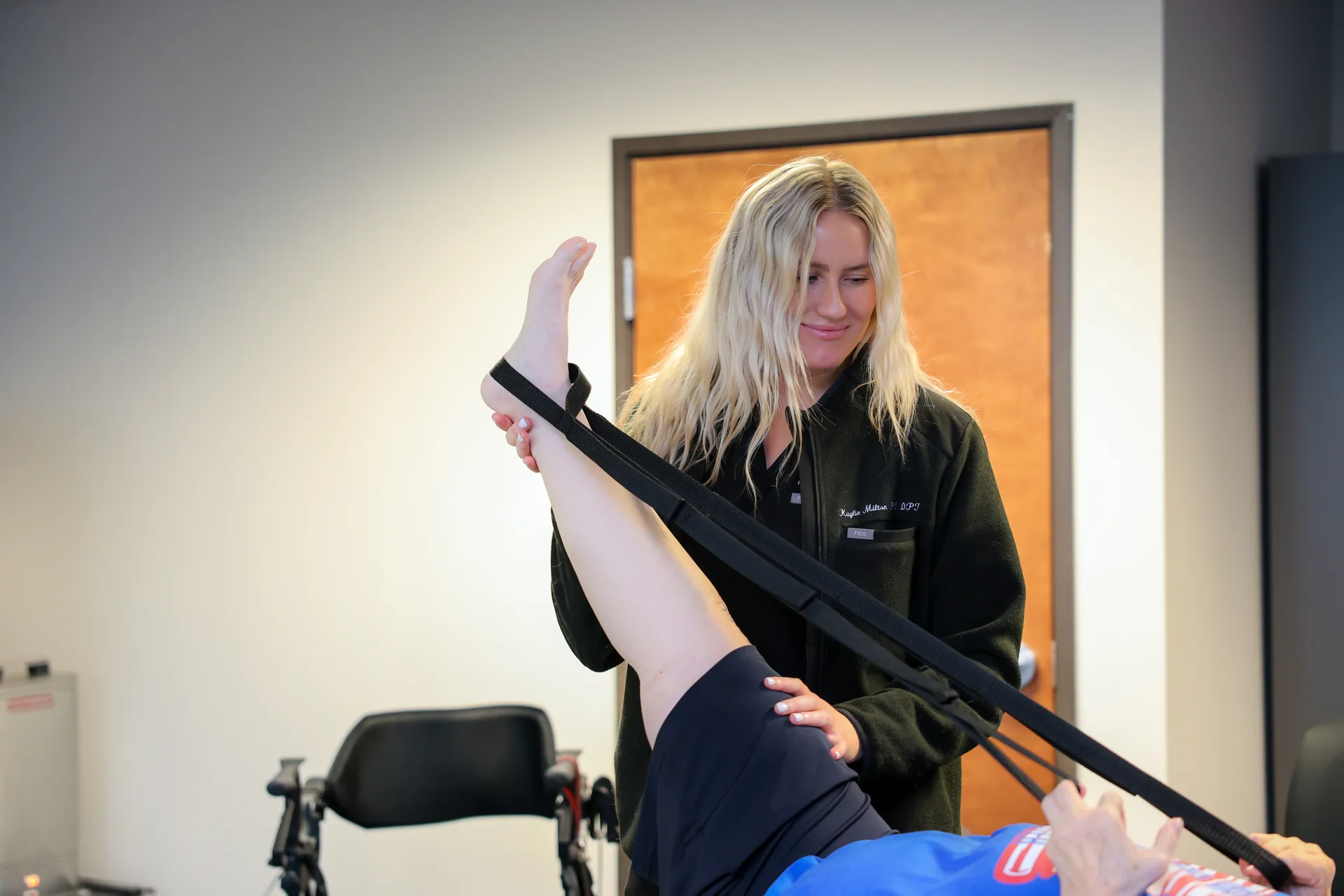
A thumb or hand holds tension on the restricted spot while you move your limb through the lengthening direction, or your therapist guides the movement. Each pass takes a few seconds. Most people feel a strong pull, then a release as the layers separate.
Load the New Range
Tissue that has just started sliding again needs a reason to keep doing it. You leave with specific exercise that loads the new range under control. At TheraRehab & Wellness, hands-on work is always paired with something you can do on your own, so the restriction doesn't rebuild the moment you train again.
CARE THAT
SEES YOU.
Treats the mechanical cause—adhesion—not just the ache it produces, so the same spot stops flaring instead of cycling through relief and return
Restores the motion that matters: muscle and fascia slide against each other again, nerves stop being tethered, and you regain force at end range where most overuse injuries happen
Combined with soft tissue mobilization, manual therapy, or dry needling when indicated, and always paired with progressive strength work so your body learns to trust the new range
WHAT TO KNOW BEFORE YOU START.
How is Active Release different from a massage?+
Massage applies broad pressure while you lie still, which can relax a muscle without changing what is stuck inside it. Active Release is specific: your therapist holds contact on the restricted spot while movement pulls the tissue through that contact, separating the layers. The motion is the whole difference. It reaches nerves as well as muscle, and it takes only a few seconds per pass.
Who benefits most from Active Release?+
Runners, lifters, desk workers, and anyone who repeats the same motion thousands of times. It works best for pain that arrived gradually from mileage rather than from one acute injury. If the sore spot keeps coming back in the same place and stretching buys you temporary relief, adhesion is usually part of the story.
Will this eliminate my numbness or tingling?+
If numbness or tingling follows a pattern and feels mechanical, it is often a nerve tethered to adhesion in the tissue around it. Freeing that nerve removes the source. Your therapist will assess whether the symptom is mechanical and explain what they find during the first visit.
How many visits will I need?+
That depends on how much adhesion is present, how long it has been there, and how you load the new range at home. You'll receive a written plan after your first visit and a reassessment after three visits. If measurable progress is not evident, your therapist will adjust the plan or connect you to another provider. Timelines are individual, not guaranteed.
More about Active Release Technique in Dallas
Not a massage. Pressure and movement at the same time.
Muscle, tendon, fascia, and nerve are supposed to slide against each other. Repetition, an old strain, or hours in the same position lay down adhesion between those layers, and the tissue stops gliding. Active Release Technique treats that directly. Your therapist holds a precise contact on the restricted spot, then takes the limb through the motion that lengthens it. The tissue is pulled through the contact, and the layers separate.
That movement is the whole difference. A massage works broadly while you lie still, so it can relax a muscle without changing what is stuck inside it. ART is specific, it takes a few seconds per pass, and it reaches nerves as well as muscle: when adhesion tethers a nerve to the tissue around it, the numbness and tingling that follow are mechanical, and freeing the nerve is what resolves them.
Best for pain that arrived gradually, from mileage rather than from one bad day.
Runners, lifters, desk workers, and anyone who repeats the same motion thousands of times. If the sore spot keeps coming back in the same place, and stretching buys you an hour, adhesion is usually part of the story.
Short passes, a strong pulling sensation, then more room.
Find the Restriction
Your therapist palpates the tissue while it moves, feeling for texture, tension, and the exact point where the glide stops. The restricted spot is often an inch or two away from where you have been pointing.
Contact, Then Motion
A thumb or hand holds tension on that spot while your therapist moves the limb through the lengthening direction, or asks you to move it yourself. Each pass lasts a few seconds. Most people describe a strong pull, then a release.
Load the New Range
Tissue that has just started sliding again needs a reason to keep doing it. You leave with exercise that loads the new range, because at TheraRehab & Wellness hands-on work is always paired with something you can do on your own.
Tissue that slides again, so the same spot stops flaring.
Adhesion is a mechanical problem, and it responds to a mechanical answer. Treating it is different from chasing the ache it produces.
Muscle and fascia move against each other again instead of dragging, so motion stops catching at the same point every time.
When adhesion tethers a nerve to the tissue around it, tingling and numbness follow the nerve. Releasing the tether removes the source.
A muscle that can finally lengthen completely can produce force at end range, which is where most overuse injuries happen.
Treating the restriction instead of the sore spot addresses the root cause, so the pattern is less likely to rebuild the moment you train again.
Services we commonly combine with active release technique.
Soft Tissue Mobilization
Sustained hands-on pressure applied along muscle and fascia to release restriction, break down adhesions, and give the tissue somewhere to move again.
Manual Therapy
Hands-on joint and soft tissue work to restore movement and ease pain.
Dry Needling
Release deep trigger points that hands-on work alone cannot reach.