
IT’S NOT JUST
WHERE IT HURTS.
- →Recurring low back stiffness that locks up for 20 minutes after you wake, then eases as you move—but you're afraid the next lift or bend will trigger it again.
- →Shooting pain, numbness, or weakness down your leg that makes stairs unreliable and sitting through a round of golf unbearable.
- →Years of small compensations have caught up. You don't know what actually caused the pain, so you can't trust your body to handle training, work, or daily life the same way.
A CLEARER WAY FORWARD.
We separate mechanical back pain from nerve irritation using movement and testing, not guessing. Then we reverse the pattern with hands-on care, restore the motion your spine lost, and rebuild the hip and core strength that should have been carrying the load all along.
Assess the Actual Driver
Movement testing, nerve screening when symptoms travel below the knee, and strength checks show us whether your pain lives in the joints and muscles of your spine or in an irritated nerve root. That difference changes everything.
Pull Symptoms Back Toward the Spine
With sciatica, we use positioning and hands-on work to take pressure off the nerve and get it gliding again. With back pain, we restore the spinal motion and load capacity you've lost so you can bend, hinge, and rotate without bracing for pain.
Build a Back That Holds Up
Progressive hip and core strength work gets the muscles that should have been sharing the load back into the game. You leave with a maintenance plan, because the second episode is the one worth preventing.
CARE THAT
SEES YOU.
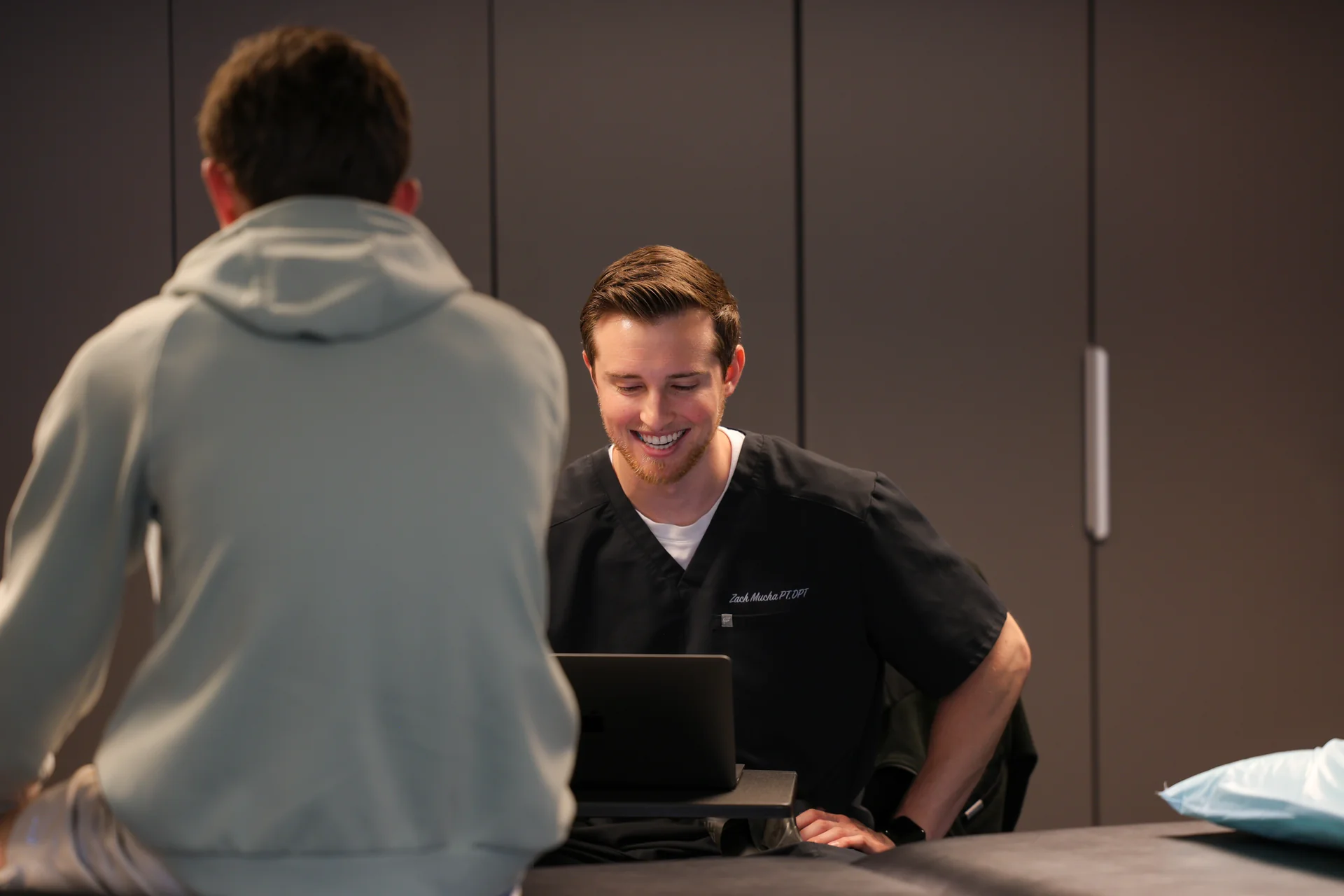
One-on-one Doctor of Physical Therapy visits. We know your history, your activities, and what matters to you—no rushed appointments, no guessing.
A written plan after your first visit and a reassessment by visit three. If measurable progress isn't there, we adjust or connect you to another provider. That's our Clarity & Progress Promise.
We modify your training and activities rather than stopping them. Return to lifting, running, golf, hiking, and pickleball with a plan you trust.
WHAT TO KNOW BEFORE YOU START.
How do you tell the difference between back pain and sciatica?+
Back pain stays above the buttock and worsens with bending, sitting, or standing too long. Sciatica is pain, numbness, or weakness traveling down the buttock and leg because a nerve root is irritated. Where the pain sits and how far it travels tells us the source before we even touch you.
Do I need an X-ray or MRI to get started?+
No. A movement exam, nerve testing when needed, and strength checks tell us more about what's driving your pain than images do. We image when it changes how we treat you, not automatically.
Do I need a referral from my doctor?+
No. Texas direct access allows you to start physical therapy without a physician referral for up to 30 days. In most cases, you can be seen within the same week.
Will I ever be able to lift or run again?+
Yes. We rebuild the strength and movement capacity your spine and hips lost, then progress what you can lift, sit through, and walk. The goal is to trust your body again and return to the activities that matter to you.
More about Back & Sciatica Pain Treatment
Back pain and sciatica are not the same problem.
Mechanical low back pain stays in the back. It is the joints, discs, and muscles of the lumbar spine objecting to how they are being loaded, and it usually gets worse with bending, sitting, standing too long, or getting up out of a chair. It rarely comes from one bad lift. The lift was just the last thing on top of years of small compensations.
Sciatica is a symptom, not a diagnosis. It is pain, numbness, or weakness traveling down the buttock and leg because a nerve root is being irritated or compressed on its way out of the spine, most often by a disc or a narrowed opening. The leg is where you feel it. The spine is where the problem lives. Working out which one you have, and which level is driving it, comes first, because the two are not treated the same way.
What your symptoms say about the source.
Where the pain sits, how far down it travels, and what makes it worse separate a joint problem from a nerve problem before we ever put hands on you.
A deep ache or a catch across the low back that stays above the buttock and never travels into the leg.
A back that will not move for the first twenty minutes of the day, then loosens once you are up and going.
Sharp, electric, or burning pain running from the buttock into the thigh, calf, or foot. That is the sciatic pattern.
The back locking down around the problem, with intense localized pain and a visible shift in how you stand.
Pins and needles in the leg or foot, a foot that slaps or catches, or a leg that feels unreliable on stairs. Nerve signs, and they change the plan.
Pain that builds while you sit, drive, or lean over the sink, then takes a moment to settle once you stand up.
First we find out which one you have.
Your evaluation is a movement exam: how you bend, hinge, rotate, and load the spine. When symptoms travel below the knee we add nerve testing, strength, reflexes, sensation, and how the leg responds to specific positions. That tells us more about what is driving your pain than an image does.
For mechanical back pain, treatment restores the joint motion and the loading capacity the spine is missing: hands-on work, spinal manipulation where it is indicated, and progressive hip and core strength. For sciatica, we first find the positions and direction that pull symptoms out of the leg and back toward the spine, take pressure off the nerve, restore its ability to glide, and only then load the back so the irritation does not return.
No referral needed to start in Texas, for up to 30 days. In most cases you can be seen within the same week.
A clear path out of the back and out of the leg.
Pull the Pain Back and Calm It Down
With sciatica, the first win is leg symptoms retreating toward the spine. With back pain, it is moving without bracing for it. Hands-on work and specific positioning start here.
Restore Motion and Nerve Mobility
We give the spine back the motion it lost and get the nerve gliding freely again, then start loading the hips and core that were never carrying their share of the work.
Build a Back That Holds Up
We progress what you can lift, sit through, and walk, then send you out with a maintenance program. The second episode is the one worth preventing.
Conditions we commonly see alongside back pain and sciatica.
Hip and Knee Pain
Stiff hips push their work into the low back. Treating one without checking the other is a common reason back pain returns.
Cervicogenic Headaches
Headaches that start in the neck. The neck and the low back share the same muscle chains, the same desk, and the same habits.
Neuropathy
Burning and numbness in both feet that has nothing to do with your spine. Different cause, different plan, and worth telling apart.