IT’S NOT JUST
WHERE IT HURTS.
- →Recurring pain in the same ankle, knee, or shoulder months after you thought it healed
- →Uncertainty about what actually broke down—and whether it's safe to train the same way
- →Rushed appointments that don't address the mechanics or strength gaps that allowed injury in the first place
A CLEARER WAY FORWARD.
Sports injuries rarely happen in isolation. A ligament sprain, muscle tear, or stress fracture usually follows months of unaddressed stress: a mobility limit, a strength gap side to side, or a training spike your body wasn't ready for. We assess the whole picture, then rebuild you systematically.
Assess the injury and its drivers
Understand exactly what happened—the tissue damage and the mechanics, strength, or training patterns that set it up. This shapes your entire rehab path and prevents recurrence.
Restore strength and movement
Progressive loading rebuilds the tissue and restores symmetry between sides. Hands-on care plus structured strengthening gets you ready for sport-specific demands.
Test and return with data
Objective performance testing—limb symmetry, power output, sport-specific movement—confirms you are ready. You go back with measurable confidence, not just hope.
CARE THAT
SEES YOU.
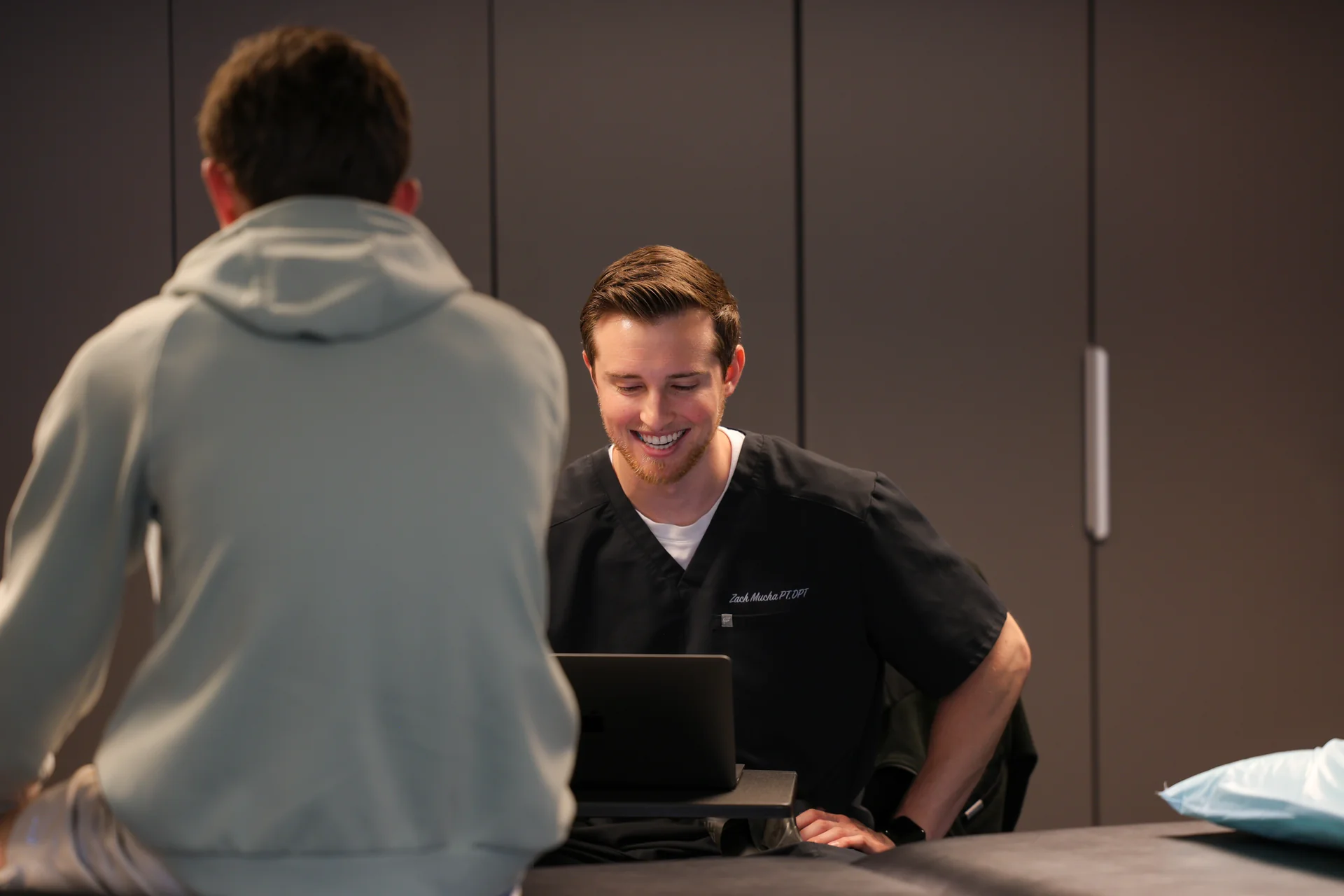
Doctor of Physical Therapy conducts a full movement assessment, not a rushed intake. You get a written plan after visit one and a reassessment after three visits—guaranteed progress tracking or a care pivot.
Texas direct access means you start without a referral. Most patients are seen within the same week. No gatekeeping, no delays.
Sport-specific criteria-based return. We define your performance benchmarks upfront, track objective measures, and clear you when the data supports it—not a calendar.
WHAT TO KNOW BEFORE YOU START.
How long does it take to return to running or lifting?+
Timelines depend on the injury type, tissue healing, and your training history. A hamstring strain follows a different path than a bone stress fracture. We establish your specific criteria at the start and progress you through loading stages that match your sport's demands. Progress is measured, not promised.
Will I need imaging or surgery?+
Not always. Assessment determines whether imaging clarifies your plan. If surgery is needed, we provide prehab to prepare you and structured rehab after to maximize recovery. If conservative care is appropriate, we build a strength-based path to return.
What if the same injury keeps coming back?+
Recurrence usually signals that the contributing factor—a mobility restriction, a strength gap, or a mechanics shift—was not addressed. We analyze what allowed the first injury and build a plan to close that gap so tissue doesn't face the same stress on return.
Do I need to stop training completely?+
Rarely. We modify your training, not your life. Early rehab protects healing tissue while pain-free movement prevents strength loss. As you progress, we gradually load the injury in structured ways that rebuild confidence and capacity.
More about Sports Injury Physical Therapy
The injury was the last event in a long story.
A ligament sprain, a muscle tear, a bone stress injury: they feel like they came out of nowhere. Usually the tissue that failed had been taking on stress for months. A training spike, a mobility limit, a strength difference side to side, a change in mechanics you never noticed.
That matters for two reasons. It shapes how we rehab the injury in front of us, and it decides what has to change before you go back to full speed.
Sports injuries range from acute to chronic overuse.
Whether you heard a pop, felt a sudden give, or noticed gradual onset with training, the assessment process starts with understanding exactly what happened and how.
Stretching or tearing of the stabilizing ligaments around the ankle, knee, or shoulder, often with a pop or give.
Partial or complete tears in muscle or tendon tissue, from hamstrings and quads to the rotator cuff and calf.
Bone stress injuries from repetitive loading, particularly in runners, gymnasts, and multisport athletes.
Chronic tendon overload producing pain with loading, most commonly affecting the patellar, Achilles, rotator cuff, and elbow tendons.
A sensation of the joint giving way or being unreliable, particularly in the ankle, knee, or shoulder.
Gradual reduction in power output, speed, or sport-specific performance, often the first sign of overuse injury developing.
From injured to tested and cleared.
Sports injury treatment at TheraRehab & Wellness follows a criteria-based model, not a calendar. We establish objective performance benchmarks at the start, define return-to-sport criteria, and progress you through loading stages that match the demands of your specific sport.
This is paired with analysis of the contributing factors: the mechanics, strength deficits, or training patterns that allowed the injury to occur. Without addressing these, the same tissue faces the same risk when you return.
No referral needed to start in Texas, for up to 30 days. In most cases you can be seen within the same week.
Protect. Restore. Perform.
Protect and Early Rehab
Reduce swelling and pain, protect healing tissue from re-injury, and begin early pain-free movement to prevent the strength and mobility losses that slow full recovery.
Restore Strength and Mechanics
Progressive loading rebuilds the tissue and restores the movement patterns, strength symmetry, and neuromuscular control required for safe sport participation.
Sport-Specific Testing and Clearance
Objective testing of limb symmetry, power output, and sport-specific movement quality confirms you are ready. You return with data, not just confidence.
Conditions commonly seen with sports injuries.
Hip & Knee Pain
Most sports injuries land at the hip or knee, and the mechanics that caused them are what keep them from repeating.
Pre & Post Surgery
If your injury needs surgery, prehab before it and structured rehab after it decide how much of your sport you get back.
Shoulder Pain
Overhead athletes and contact sport players frequently present with shoulder instability or rotator cuff injury.