IT’S NOT JUST
WHERE IT HURTS.
- →Holding onto railings, counters, and walls just to cross a room or climb stairs safely
- →Feeling unsteady on uneven ground—grass, gravel, curbs—or needing to watch your feet constantly
- →A shuffling gait and frequent catching yourself, making walking feel effortful instead of automatic
A CLEARER WAY FORWARD.
Balance training only works if it targets the real problem. We assess your vestibular system, vision, sensation, and strength separately. Then we train the specific system that's failing—not generic conditioning.
Find the Failing System
We watch your walk, time your balance under different conditions, check how your eyes and inner ear respond to head movement, measure hip and ankle strength, and review recent changes including new medications or falls. You leave the first visit knowing what's driving it.
Train Balance and Strength Together
Vestibular therapy for inner ear and gaze problems. Graded balance work and hip-and-ankle strengthening so your body can correct itself before you've started to fall. All one-on-one, supervised, and hard enough to actually change something.
Take It Into the Real World
We progress to the surfaces and situations that worry you most: stairs, curbs, grass, crowds, fast turns, carrying objects. Confidence comes from doing it under guidance, not from being told you can.
CARE THAT
SEES YOU.
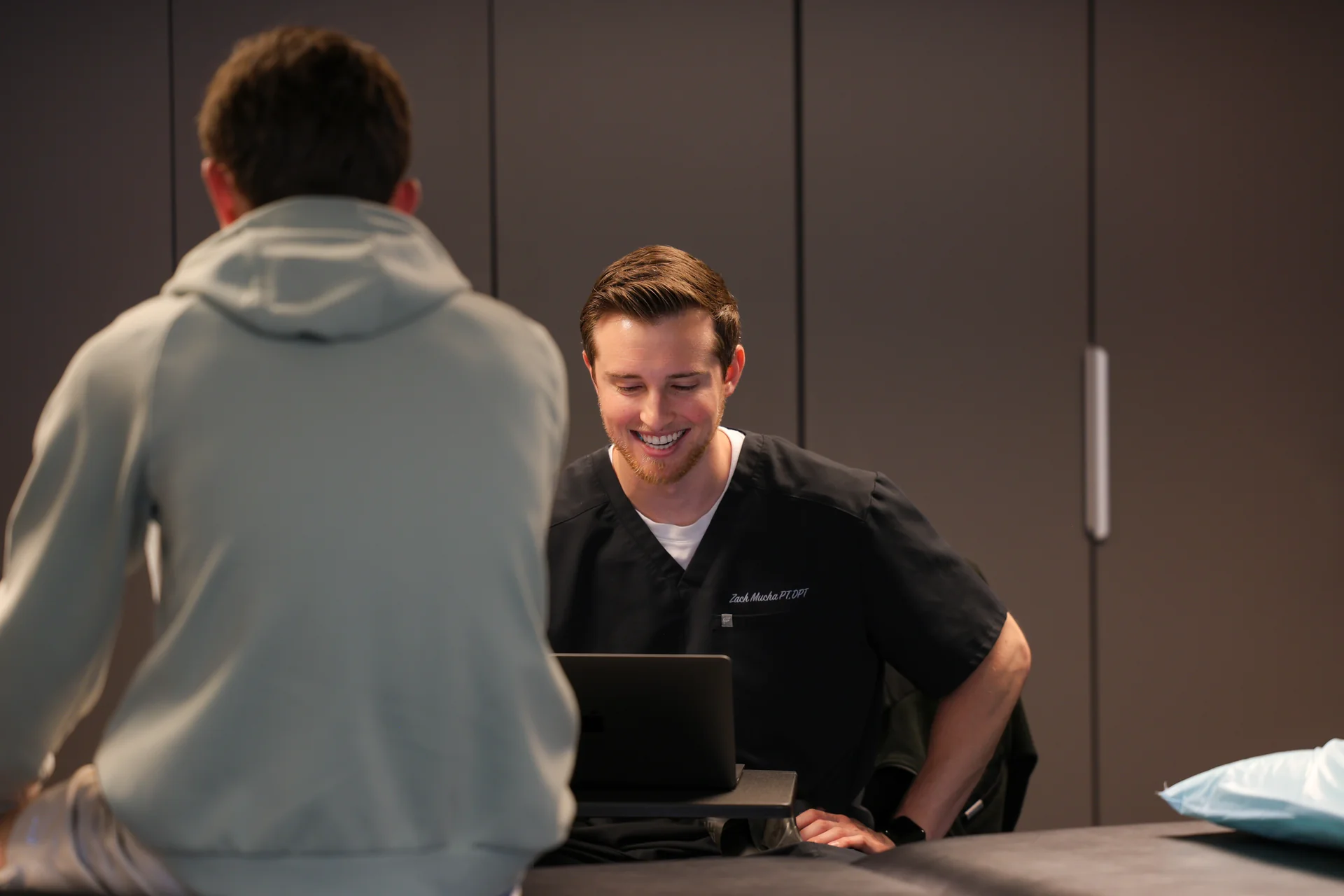
One-on-one assessment by a Doctor of Physical Therapy who knows your full history and adjusts your plan as you improve
Texas direct access means no referral required to start—most patients are seen within the same week
Clear progress tracking: if measurable improvement isn't seen after three visits, we reassess or connect you to another provider
WHAT TO KNOW BEFORE YOU START.
Is my unsteadiness just getting older, or can it actually improve?+
Balance is made of trainable systems: strength, reaction time, and sensory input from your inner ear, eyes, and feet. Age changes these, but it doesn't lock them in. We've worked with patients in their 60s and 70s who regained confident stair descent and returned to hiking and golf.
What's the difference between my dizziness and my balance problem?+
Most people call it all dizziness, but the real problems are different. Swaying when you turn, the room spinning when you move your head, shuffling carefully, or needing to touch walls—each one points to a different failing system (inner ear, strength, gait), and each one trains differently.
Do I need a doctor's referral to start?+
No. In Texas, physical therapists have direct access—you can start without a referral for up to 30 days. If you do need one, your insurance may require it, and we'll help coordinate that.
How long does balance training usually take?+
It depends on which system is failing and how much it's failed. Some people see real change in 4–6 weeks; others need 8–12. We reassess after the initial three visits and adjust the plan based on what you're actually gaining, not on a preset timeline.
More about Balance and Gait Disorders in Dallas
Balance is a system, not a talent.
Staying upright is three inputs agreeing with each other: the inner ear reporting where your head is, the eyes reporting where the world is, and the sensors in your feet, ankles, hips, and spine reporting what the ground is doing. Strength does the actual correcting. When one input weakens or arrives a beat late, the others work harder to cover for it, and walking stops feeling automatic.
That is why unsteadiness has so many different causes: an inner ear problem, a neurological condition, weak hips and ankles, stiff joints, the side effects of a new medication, or simply years of moving less. The useful question is not "why am I dizzy." It is which part of the system is failing, and by how much. We test them separately, because the answer decides the training.
What unsteadiness actually looks like.
Most people describe all of it as dizziness. Underneath that one word are several very different problems, and they respond to different training.
A sense of swaying or veering, worst when you turn around, stand up quickly, or walk in the dark.
The room moves when you roll over in bed, look up at a shelf, or turn your head quickly.
A careful, shuffling walk with less arm swing. It is the body trying to feel safer, and it makes balance worse.
Touching furniture, counters, and walls to cross a room, or needing the rail on every set of stairs.
Grass, gravel, curbs, and door thresholds take real concentration, and looking away from your feet feels risky.
Catching yourself more often than you used to, sometimes when nothing was there to trip on.
We test each system, then train the weak one.
The evaluation is specific. We watch how you walk, time how long you hold your balance under different conditions, see how you recover when your balance is disturbed, check how your eyes and inner ear behave when your head moves, and measure the strength available at the hip and ankle. We also ask what has changed recently, including new medications and any falls, because those change the picture.
Then we train the part that is actually failing. Vestibular therapy for inner ear and gaze problems. Strength and reaction work for hips and ankles that cannot correct fast enough. Neuromuscular re-education and gait training to rebuild a normal, confident step. All of it one-on-one, which matters here: balance training only helps if it is hard enough to change something and supervised enough to be safe.
No referral needed to start in Texas, for up to 30 days. In most cases you can be seen within the same week.
A clear path back to walking without thinking about it.
Find the Failing System
Testing separates inner ear, vision, sensation, and strength, so training targets the real problem instead of general conditioning. You leave the first visit knowing what is driving it.
Train Balance and Strength Together
Graded balance work, gaze stabilization where the inner ear is involved, and honest strengthening at the hip and ankle, so your body can correct itself before you have started to fall.
Take It Into the Real World
We progress to the surfaces and situations that actually worry you: curbs, stairs, grass, crowds, turning fast, carrying something. Confidence comes from doing it, not from being told you can.
Related conditions we treat in Dallas.
Fall Prevention
One fall changes everything about how a person lives. Strength, balance, and reaction time are all trainable, and training them is the whole point.
Hip and Knee Pain
Stairs, standing up, and walking distance are all trainable again.
Pre and Post Surgery
Go into surgery stronger and come out of it with a plan.