
IT’S NOT JUST
WHERE IT HURTS.
- →Knee pain on stairs or after sitting, but no one explains why it keeps returning
- →Hip stiffness in the morning or groin ache with rotation that limits your golf swing or hiking
- →Feeling like your knee might give way, worried about re-injury during your regular training
A CLEARER WAY FORWARD.
Hip and knee pain follow patterns. Where it hurts and what sets it off points us to the structure that needs work. We watch how you move, name the contributors in your chain, then address them in order.
Assess the Whole Chain
We analyze your gait and loaded positions—squatting, stepping, turning—to find where ankle stiffness, hip weakness, or altered mechanics are loading your knee or hip joint beyond what it can handle.
Restore Mobility and Reduce Pain
Hands-on therapy restores joint range at the hip, knee, or ankle. Pain science education helps you understand what's happening and why modification, not avoidance, is the path forward.
Rebuild Strength and Return to Activity
Progressive loading rebuilds the control your body needs for stairs, running, golf, or whatever matters to you. We test readiness at each step so you trust your leg again.
CARE THAT
SEES YOU.
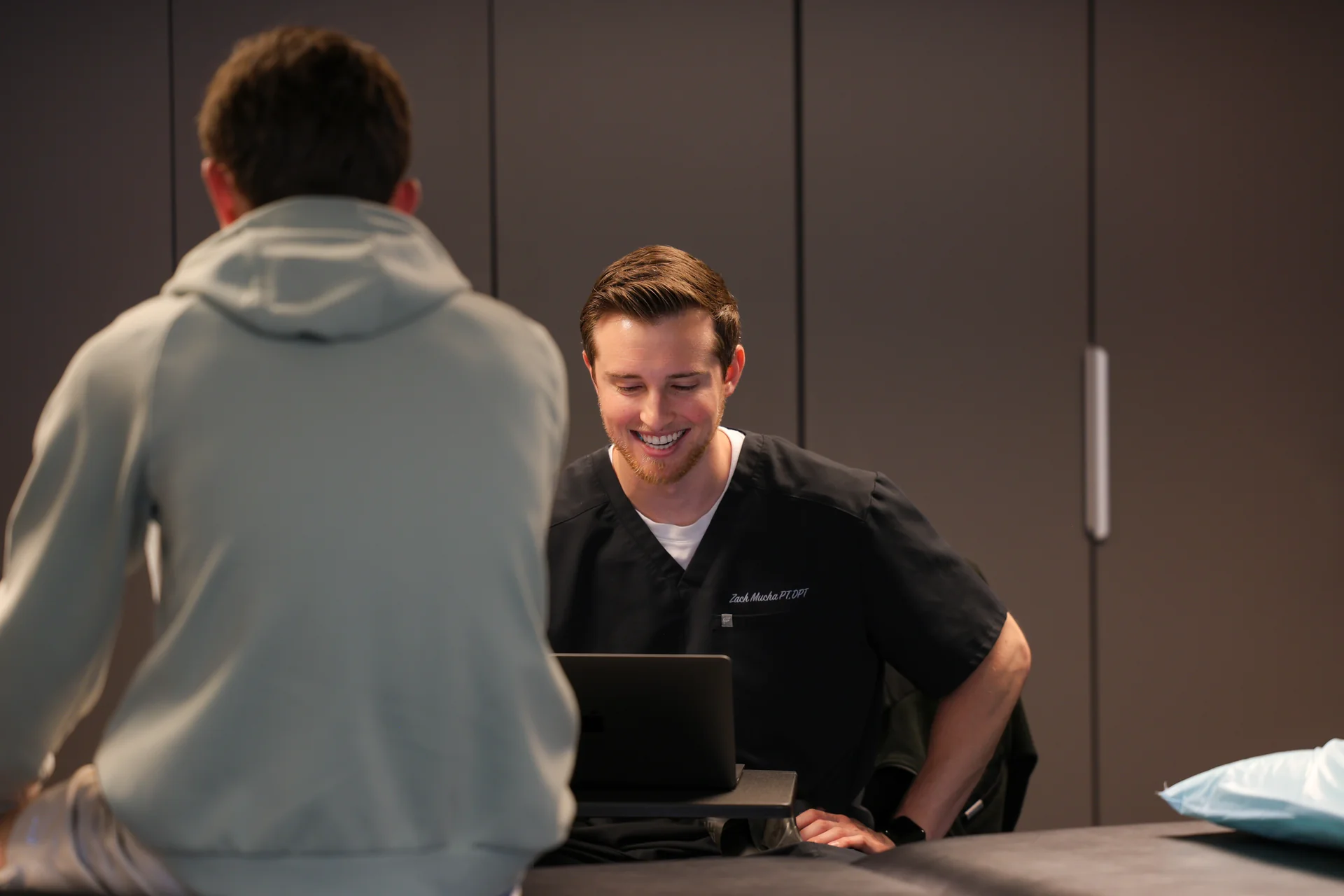
One-on-one care with a Doctor of Physical Therapy who knows your movement history and adjusts your plan based on what we see, not generic protocols.
We treat the chain, not just the joint. Weak hip muscles, stiff ankles, and tight hip flexors all drive knee and hip pain back—we address all of it.
A written plan after your first visit and reassessment after three visits. If progress stalls, we adjust or connect you to the right resource.
WHAT TO KNOW BEFORE YOU START.
Do I need a doctor's referral to start?+
No. Texas direct access allows you to begin physical therapy without a physician referral for up to 30 days. In most cases, we can see you within the same week.
Why does my knee hurt on stairs but not on flat ground?+
Stairs load your knee at end-range bend while adding body weight. If your hip is weak, your ankle stiff, or your mechanics altered, the knee absorbs force it's not ready for. We find which part of your chain is missing and rebuild it.
How long does hip or knee pain usually take to improve?+
Timelines are individual. Pain often settles quickly once we address the drivers, but restoring full strength and confidence takes progressive work. We reassess after three visits and adjust based on what you show us.
Can physical therapy help me avoid surgery?+
Many hip and knee conditions improve with hands-on care, mobility work, and progressive loading. If surgery becomes necessary, what you do before and after it decides how much function you regain. We start where you are and build from there.
More about Hip & Knee Pain Treatment Dallas
The chain runs from your foot to your spine.
Hip and knee pain are the most common lower body complaints we see, and the most commonly mistreated. Treating only the joint that hurts, without looking at what the foot below and the low back above are asking it to do, misses the part that actually keeps the pain coming back.
Weak hip muscles load the IT band. A stiff ankle drives the knee inward on every step. Tight hip flexors tilt the pelvis and stress the low back. We assess the whole chain and treat what we find, not just where you point.
Where it hurts tells us what is involved.
Hip and knee pain follow patterns. Where the pain sits, and what sets it off, points us toward the structure that needs the work.
Pain at the front of the knee going down stairs or after prolonged sitting, classic for patellofemoral syndrome.
Pain on the outside of the knee with running or prolonged walking, typically IT band syndrome or lateral compartment issues.
Hip joint stiffness first thing in the morning that loosens after 15-30 minutes of movement.
Deep aching in the groin with hip rotation or end-range flexion, often labral or arthritic in nature.
A sensation of the knee suddenly giving way, associated with ligament laxity, meniscal involvement, or quad inhibition.
Pain with deep knee bend, getting in and out of a car, or rising from a low chair or toilet seat.
Load the chain correctly and the joint settles.
Hip and knee care at TheraRehab & Wellness starts with watching you move. We analyze your gait and your loaded positions, squatting, stepping, turning, to find where the chain gives out. Then we name the contributors: hip weakness, ankle stiffness, altered mechanics, and work through them in order.
Hands-on work restores mobility at the hip, knee, or ankle as needed. Progressive loading rebuilds the strength and control your day actually asks for, whether that is stairs, a job on your feet, or a Saturday run.
No referral needed to start in Texas, for up to 30 days. In most cases you can be seen within the same week.
From painful stairs back to full days.
Reduce Pain and Restore Joint Mobility
Manual therapy and pain science education reduce acute symptoms while restoring the joint range needed for normal movement.
Address the Contributing Chain
Hip strengthening, ankle mobility work, and movement pattern correction address the upstream and downstream drivers of knee and hip pain.
Progressive Loading and Return to Activity
Gradual progression back to stairs, running, sport, or any other activity goal, with objective testing to confirm readiness.
Conditions commonly linked to hip and knee pain.
Back Pain & Sciatica
A stiff hip pushes load into the low back, and back problems change how the whole leg moves. The two travel together.
Sports Injuries
ACL tears, meniscus injuries, and overuse conditions of the knee and hip are common presentations in our sports rehab program.
Pre & Post Surgery
If a replacement or a reconstruction is on the calendar, what you do before and after it decides how much function you get back.