
IT’S NOT JUST
WHERE IT HURTS.
- →Hitting a hard stop before full motion, especially in reaching, turning, or getting off the floor
- →Stretching that does not budge the restriction because the block is inside the joint, not in the muscle
- →Stiffness in one joint forcing other areas to compensate and hurt
A CLEARER WAY FORWARD.
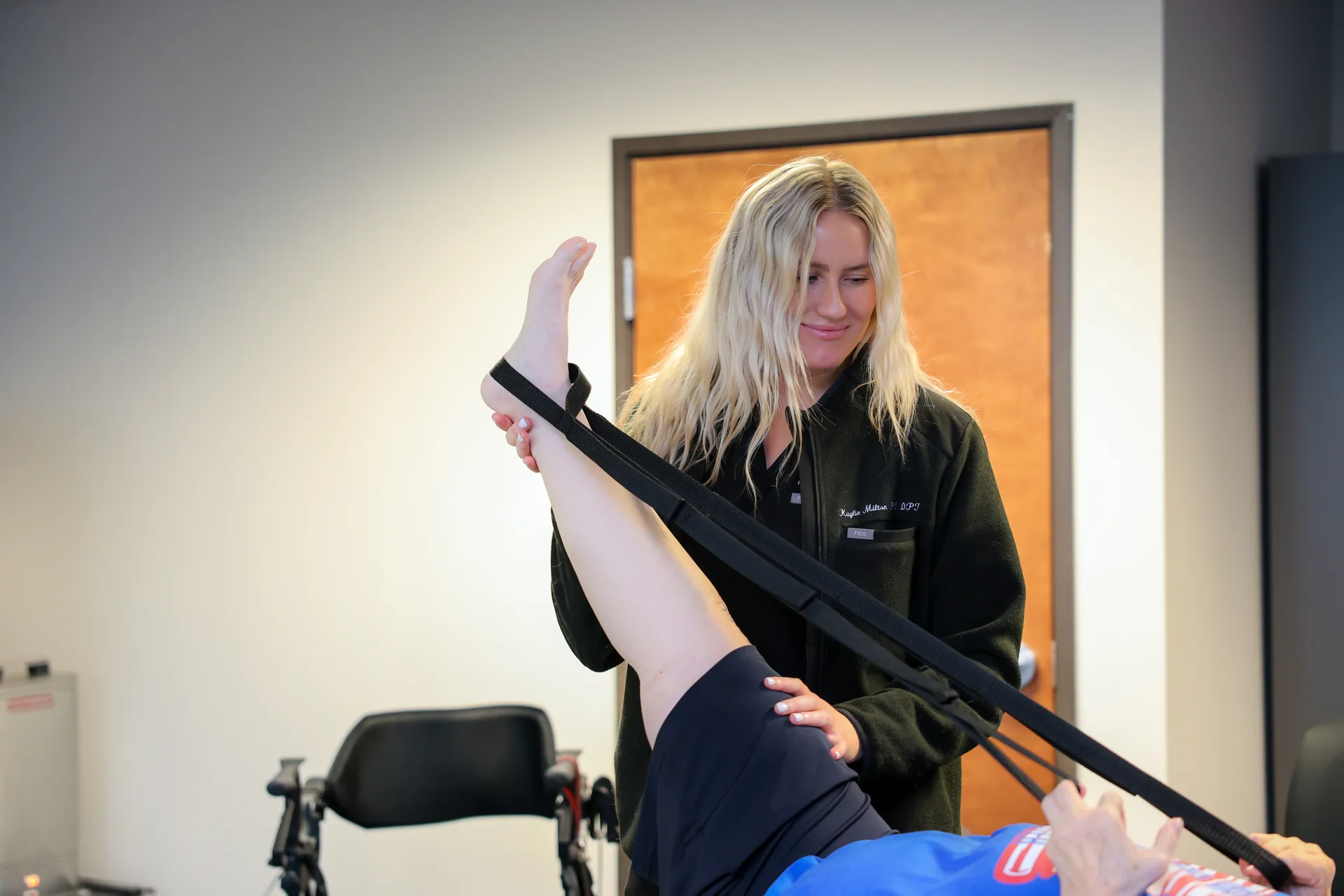
Joint mobilization is slow, controlled pressure applied by your therapist in the exact direction your joint has lost motion. It restores accessory motion—the small glide, roll, and spin between joint surfaces that no amount of your own effort can create. No thrust. No pop. Just precision and patience.
Find Where It Stops
Your therapist moves the joint for you and reads the end feel. A hard, abrupt block points to the joint capsule. A springy, guarded one points to muscle or pain. That answer decides your treatment.
Grade and Direction
Gentle rhythmic or sustained pressure is applied in the one direction the glide is missing, at a grade your joint tolerates. You stay relaxed and in control the entire time.
Own the New Range
The range you just gained gets used before you leave, with active exercise into it. Strength through new motion keeps the range. Without it, the joint hands the motion back within days.
CARE THAT
SEES YOU.
Assessment that distinguishes capsule restriction from muscle guarding or pain—the difference between a plan that works and more stretching that does not
Restoration of range in the exact direction you lost it, so reaching, turning, and lifting show up again without compensation above or below
Immediate integration of new motion into movement, not just passive gain—your body trusts the change because you practice it in the clinic
WHAT TO KNOW BEFORE YOU START.
Is joint mobilization the same as a chiropractic adjustment?+
No. Joint mobilization uses graded, controlled pressure in the direction of lost motion. There is no thrust, no pop, and you control the intensity and can stop at any time. Adjustments use a quick thrust. Both can restore motion, but they are different techniques.
Will it hurt?+
Joint mobilization should not hurt. You may feel mild pressure or a gentle stretch, and you should be able to breathe and stay relaxed throughout. If something is painful, tell your therapist and the pressure adjusts immediately.
How many sessions do I need?+
That depends on how long the restriction has been there and how your joint responds. Your therapist will reassess after three visits and adjust the plan or connect you to another provider if measurable progress is not seen. Timelines are individual.
What if I have tried stretching and it did not work?+
Stretching works on muscle. If the motion ends in a hard block rather than a pull, the restriction is likely in the joint capsule itself. That is where joint mobilization goes. Your therapist will confirm where the block is and treat it directly.
More about Joint Mobilization in Dallas
Not an adjustment. No thrust, no pop required.
Every joint has two kinds of motion. There is the movement you can produce yourself, like bending an elbow or lifting an arm. Underneath that there is accessory motion: the small glide, roll, and spin between the two joint surfaces that no amount of effort on your part can create. When accessory motion is lost, the joint reaches a hard stop early, and stretching the muscle around it will not change that, because the restriction is inside the joint.
Joint mobilization restores it. Your therapist stabilizes one bone and applies graded, controlled pressure to the other in the exact direction the glide is missing. Gentle rhythmic grades are used when pain is the limiting factor. Firmer, sustained grades are used when the capsule is genuinely tight. It is slow, you stay relaxed, and it stops the moment you say so.
For joints that stop before they should.
There is a difference between a stretch you can feel and a wall you cannot get past. If the motion ends in a hard block rather than a pull, more stretching will not move it. The restriction is in the joint, and the joint is where the treatment goes.
Slow pressure, small movements, and more room at the end.
Find Where It Stops
Your therapist moves the joint for you and reads what the end of the motion feels like. A hard, abrupt stop points to the capsule. A springy, guarded one points to muscle or pain. That answer decides the treatment.
Grade and Direction
Pressure is applied in the one direction the glide is missing, at a grade your joint tolerates. Some of it is rhythmic and repeated, some of it is held. You should be able to stay relaxed and breathe the whole time.
Own the New Range
The range that just opened up gets used before you leave, with active exercise into it. A joint that gains motion without strength through that motion hands the range back within days.
Range you can use, in the direction you actually lost.
Reaching the top shelf, turning to back out of a driveway, getting off the floor. Range only matters when it shows up in something you were avoiding.
Restoring the glide inside the joint gives back the last part of the range, which is usually the part that daily tasks need most.
Gentle, rhythmic mobilization calms an irritable joint through the nerve endings in the joint itself, often before any range has changed.
A stiff joint makes the segment above or below do its work. Freeing the stiff one takes load off the area that started hurting, which is the root cause more often than people expect.
You find out whether the block is capsule, muscle, or guarding. That is the difference between a plan that works and more stretching that does not.
Services we commonly combine with joint mobilization.
Manual Therapy
Hands-on joint and soft tissue work to restore movement and ease pain.
Spinal Manipulation
A quick, precisely targeted thrust that restores motion to a locked spinal segment, performed by a licensed physical therapist after a full examination.
Physical Therapy
One-on-one rehabilitation built around how your body actually moves.