IT’S NOT JUST
WHERE IT HURTS.
- →Stiffness that won't budge with stretching alone, limiting your golf swing or running stride
- →Joint pain that makes you guard your movement, weakening the muscles that should stabilize you
- →Feeling stuck in a cycle: tight joints, weak muscles, persistent ache—with no clear way to break it
A CLEARER WAY FORWARD.
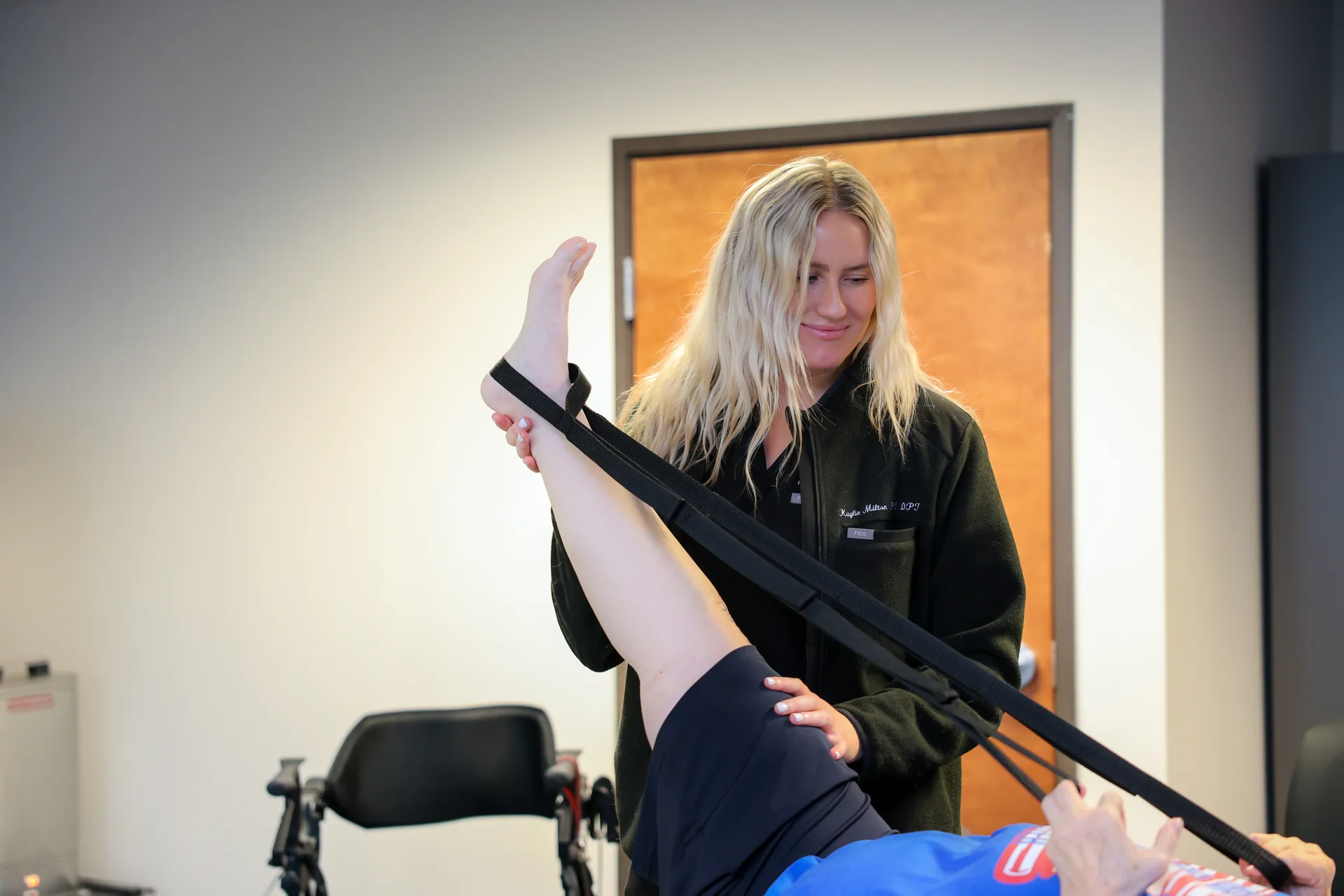
Manual therapy is anatomy read through the hands. Your therapist identifies which joints have lost mobility or soft tissue is restricted, applies specific techniques to restore normal mechanics, then reinforces that mobility with movement. The result: joints that move the way they're designed to, so muscles can work the way they're supposed to.
Joint Mobility Assessment
We examine which joints have reduced range, increased stiffness, or abnormal end-feel. This directs exactly which techniques will work for your presentation.
Targeted Mobilization or Manipulation
Specific hands-on techniques are applied to the joints or soft tissue identified in your assessment. You typically feel an immediate change in stiffness or pain.
Active Movement Practice
Mobility gained through manual work is reinforced with exercise. Without this step, restricted joints return to their old state within days. Movement makes the change stick.
CARE THAT
SEES YOU.
Dr. Mark Anthony Rodriguez holds specialized training in manual therapy, manipulations, and adjustments—applied with precision where evidence supports it
Manual therapy is never standalone; it opens the window for therapeutic exercise and education to create lasting change aligned with your activity goals
Immediate relief from neurophysiological effects allows your muscles to relax and work correctly, restoring normal movement patterns without surgery or extended downtime
WHAT TO KNOW BEFORE YOU START.
What conditions benefit most from manual therapy?+
Any condition where reduced joint mobility or soft tissue restriction is contributing to pain or movement limitation. Particularly effective for stiffness, restricted range of motion, and joint-driven pain that limits activities like lifting, running, golf, or hiking.
Will manual therapy alone fix my pain?+
No. Manual therapy is the foundation that restores normal joint mechanics. Exercise and movement practice reinforce that mobility and build the strength to keep it. Together, they create lasting change. Without the exercise component, mobility often returns to its restricted state within days.
How quickly will I feel a difference?+
Most patients feel an immediate change in stiffness or pain during or right after a manual therapy session. Lasting improvement depends on your active participation in exercise and your commitment to the PAIN → PRIME → PERFORM → PREVENT process. Your therapist will reassess progress after three visits and adjust the plan if needed.
Is manual therapy safe? What about manipulation?+
Manual therapy techniques are applied by a licensed Doctor of Physical Therapy after thorough assessment. Mobilizations and manipulations are targeted to the specific joints and restrictions identified in your evaluation. Your therapist may combine manual therapy with dry needling or laser therapy if clinically indicated to accelerate healing.
More about Manual Therapy in Dallas, TX
The foundation of effective physical therapy.
Manual therapy is a set of skilled hands-on techniques: joint mobilization, manipulation, myofascial release, and neural mobilization, applied by a physical therapist to restore normal tissue mechanics. It is anatomy read through the hands, one joint and one tissue layer at a time. Dr. Mark Anthony Rodriguez holds specialized training in manual therapy, manipulations, and adjustments.
At TheraRehab & Wellness, manual therapy is never a standalone treatment. It is the tool that opens the window for therapeutic exercise and patient education to create lasting change. We use it precisely, where the evidence supports it, to address specific movement restrictions and pain sources.
Particularly effective for stiffness, restricted movement, and joint-driven pain.
Any condition where reduced joint mobility or soft tissue restriction is contributing to your pain or movement limitation is a candidate for manual therapy.
Precise, responsive, and immediately felt.
Joint Mobility Assessment
Your therapist examines which joints have reduced mobility, increased stiffness, or abnormal end-feel. This directs which techniques will be most appropriate for your presentation.
Targeted Treatment
Specific mobilization or manipulation techniques are applied to the joints or soft tissue identified in your assessment. You will typically feel an immediate change in stiffness or pain.
Active Movement Practice
Mobility gained through manual work is reinforced with movement. Without this step, the joint often returns to its restricted state within days. Exercise makes the change stick.
Restored motion, reduced pain inhibition.
When joints move the way they are designed to, muscles can work the way they are supposed to. Manual therapy restores the foundation that exercise depends on.
Joints that have lost their normal range of motion recover the movement needed for pain-free function.
Neurophysiological effects of joint manipulation provide rapid pain relief that allows more effective exercise.
When underlying joint restriction is resolved, the muscles protecting it can finally relax and lengthen.
Restoring joint mechanics allows the nervous system to recruit muscles in the correct sequence and timing.
Services commonly combined with manual therapy.
Physical Therapy
The exercise component that reinforces and maintains the mobility restored through hands-on treatment.
Dry Needling
Trigger point release that addresses the muscular component alongside the joint restrictions manual therapy targets.
Laser Therapy
Photobiomodulation to reduce inflammation and accelerate tissue healing in joints addressed by manual work.