
IT’S NOT JUST
WHERE IT HURTS.
- →Cleared by your doctor but your knee buckles on uneven ground or your shoulder still hurts overhead
- →Strength tests show you're ready, but compensations kick in during real activities like carrying groceries or landing from a jump
- →Recurring pain in the same spot because one structure absorbs load that should be shared across multiple muscles
A CLEARER WAY FORWARD.
Neuromuscular reeducation is not strengthening—it is retraining which muscle fires, how hard, in what order, and how early. Your therapist watches you move through real tasks, breaks down the pattern, and rebuilds it with hands-on cues, mirrors, and progressive challenge until the correct sequence becomes automatic.
Watch You Move
Your therapist observes walking, stepping down, squatting, reaching overhead, and standing on one leg. Compensations show up in transitions—exactly where a strength test cannot see them.
Cue the Right Pattern
Movement is broken down and rebuilt with a hand on the muscle that should fire, a mirror, or a change in position. Speed and load stay low at first because the goal is correct sequence, not difficulty.
Make It Automatic
Difficulty climbs: uneven surfaces, added weight, more speed, fatigue, conversation. The pattern is yours when it holds up while you're thinking about something else.
CARE THAT
SEES YOU.
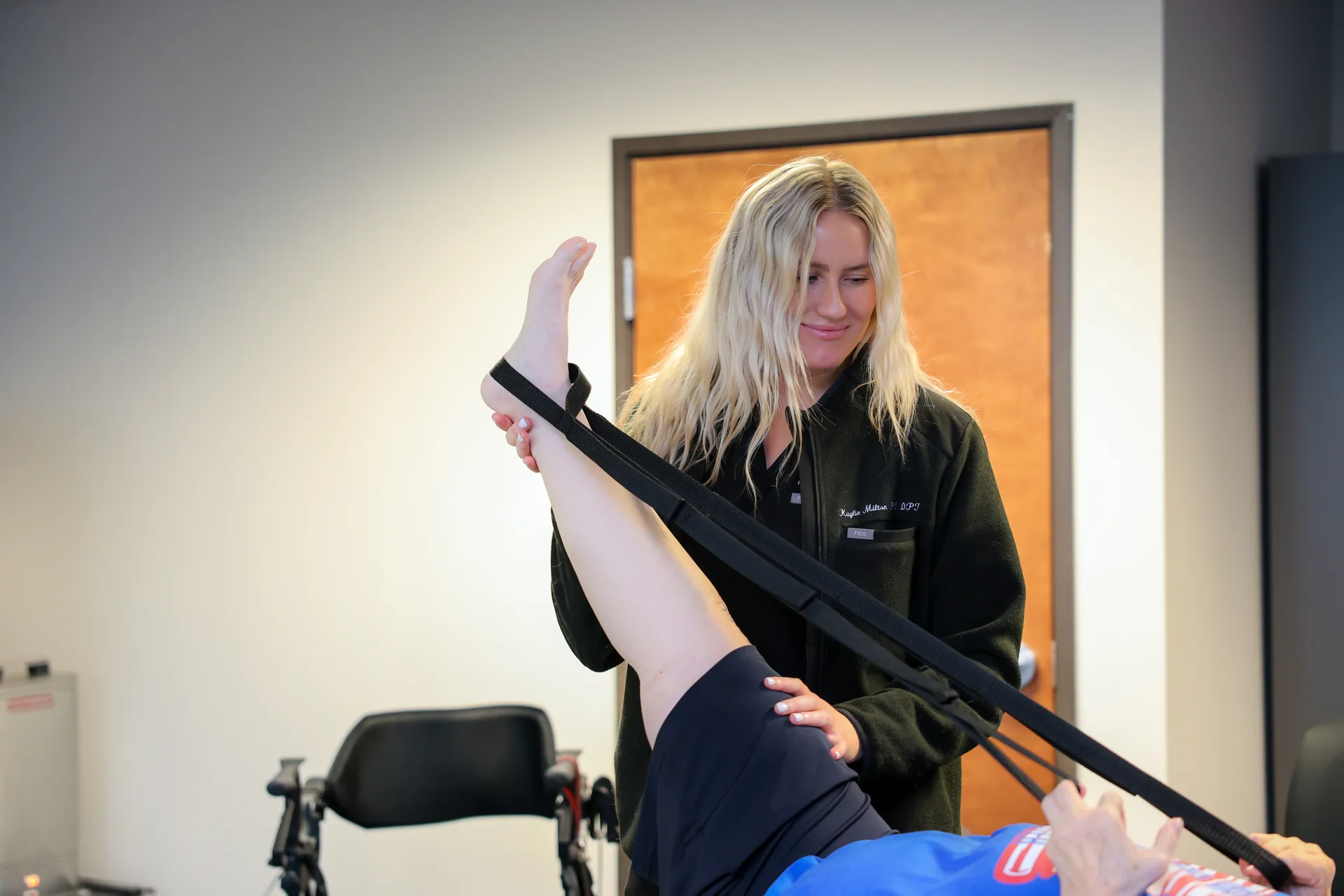
One-on-one assessment by a Doctor of Physical Therapy who sees your whole movement pattern, not just test scores
Clear written plan after your first visit and measurable progress check after three visits—if progress stalls, we adjust or connect you to another provider
Dallas-based clinic experienced in returning active adults to stairs, golf swings, running, and pickleball without automatic movement restrictions
WHAT TO KNOW BEFORE YOU START.
What's the difference between neuromuscular reeducation and strengthening?+
A muscle can be strong and still fire late. Pain, swelling, and injury change how your nervous system recruits muscle within days. Tissue heals on schedule; the pattern often doesn't. Strengthening builds the engine. Neuromuscular reeducation fixes the wiring—which muscle turns on, how hard, and in what order.
Why do I still not trust my knee even though I'm cleared and pain-free?+
That gap is not weakness and it is not in your head. It is control, and control is trainable. When compensations persist, one structure absorbs load that should be shared. Retraining the pattern addresses the root cause and restores confidence in real activities like stairs and uneven ground.
How long does it take to retrain a movement pattern?+
Timelines are individual. Progress depends on injury severity, how long the compensation has been in place, and your consistency with practice. Your therapist will reassess after your initial visits and adjust the plan or refer you if progress is not measurable.
What activities will neuromuscular reeducation help me return to?+
Common goals include stepping down stairs without bracing, carrying groceries without shoulder pain, landing from a jump without checking first, walking on uneven ground, and returning to golf, running, or pickleball with confidence and proper mechanics.
More about Neuromuscular Reeducation in Dallas
Not strengthening. A muscle can be strong and still be late.
Pain and swelling change how your nervous system recruits muscle. Within days of an injury or a surgery, the muscles closest to the problem get turned down and other muscles take over the job. The tissue heals on schedule. The pattern does not. That is why a knee can test strong on the table and still buckle on a curb, and why a shoulder can be cleared and still hurt overhead.
Neuromuscular reeducation retrains the pattern itself: which muscle fires, how hard, in what order, and how early. Your therapist uses hands-on cues, positioning, mirrors, balance challenge, and slow controlled loading so the correct sequence is repeated enough times that your nervous system takes it back as the default. Strength work builds the engine. This is the wiring.
For when the tissue healed but the movement never came back.
You can be cleared, pain free, and still not trust the leg going down stairs. That gap is not weakness and it is not in your head. It is control, and control is trainable.
Slow it down, rebuild it, then take the thinking out of it.
Watch You Move
Your therapist watches real tasks: walking, stepping down, squatting, reaching overhead, standing on one leg. Compensations show up in the transitions between positions, which is exactly where a strength test cannot see them.
Cue the Right Pattern
The movement gets broken down and rebuilt with a hand on the muscle that should be working, a mirror, or a change in position. Speed and load come down at first, because the goal is the correct sequence, not the hard version.
Make It Automatic
Then the difficulty climbs: uneven surfaces, added weight, more speed, some fatigue, a conversation while you do it. The pattern is yours when it holds up while you are thinking about something else.
Movement you stop having to manage.
The finish line is not a number on a test. It is stepping off a curb, carrying groceries up stairs, or landing off a jump without checking first.
The right muscle turning on early enough is what protects a joint. Half a second late and the tissue around it takes the load instead.
Faster corrections on uneven ground, in the dark, and while turning. For older adults this is the difference between a stumble and a fall.
When the pattern is off, one structure absorbs what several should share. Fixing the pattern addresses the root cause of a lot of recurring pain.
Trusting the knee, the ankle, or the shoulder again is a real outcome, and for most people it is the one that decides how big their life stays.
Services we commonly combine with neuromuscular reeducation.
Physical Therapy
One-on-one rehabilitation built around how your body actually moves.
Orthopedic Therapy
Joint, tendon, ligament, and muscle injuries assessed and treated one-on-one, from the first flare to full load.
Sports Rehab
Return to your sport stronger, with a plan for staying there.