IT’S NOT JUST
WHERE IT HURTS.
- →Recurring pain in the same joint—ankle, knee, shoulder, or back—that stops you mid-season or mid-workout
- →Rushed appointments that skip the real cause, leaving you guessing what's actually broken
- →Fear that one wrong move will set you back weeks, so you avoid the stairs, the court, or the loaded barbell
A CLEARER WAY FORWARD.
Orthopedic therapy targets the musculoskeletal system: bones, joints, cartilage, tendons, ligaments, and muscles. We find which tissue is irritated, what movement provokes it, and what elsewhere in your chain is making it work harder than it should. Then we go after the cause, not just the sore spot carrying the load.
Full Orthopedic Evaluation
Your first visit is a one-on-one evaluation with a Doctor of Physical Therapy. We take your history, assess strength and movement, and review any imaging or surgical notes you bring. Your therapist explains the findings and the next steps.
Settle & Restore
Early sessions calm the irritated tissue and restore motion with hands-on work. Joint mobilization, laser, shockwave, or dry needling may be added when your presentation calls for it.
Load & Build
Then we progressively load: strength, control, and capacity built session by session until the tissue tolerates stairs, the court, or hour eight of your workday—with margin left over. Most patients attend two to three times a week for four to six weeks.
CARE THAT
SEES YOU.
A written plan after your first visit and a reassessment after three sessions—we adjust or connect you to another provider if measurable progress is not seen
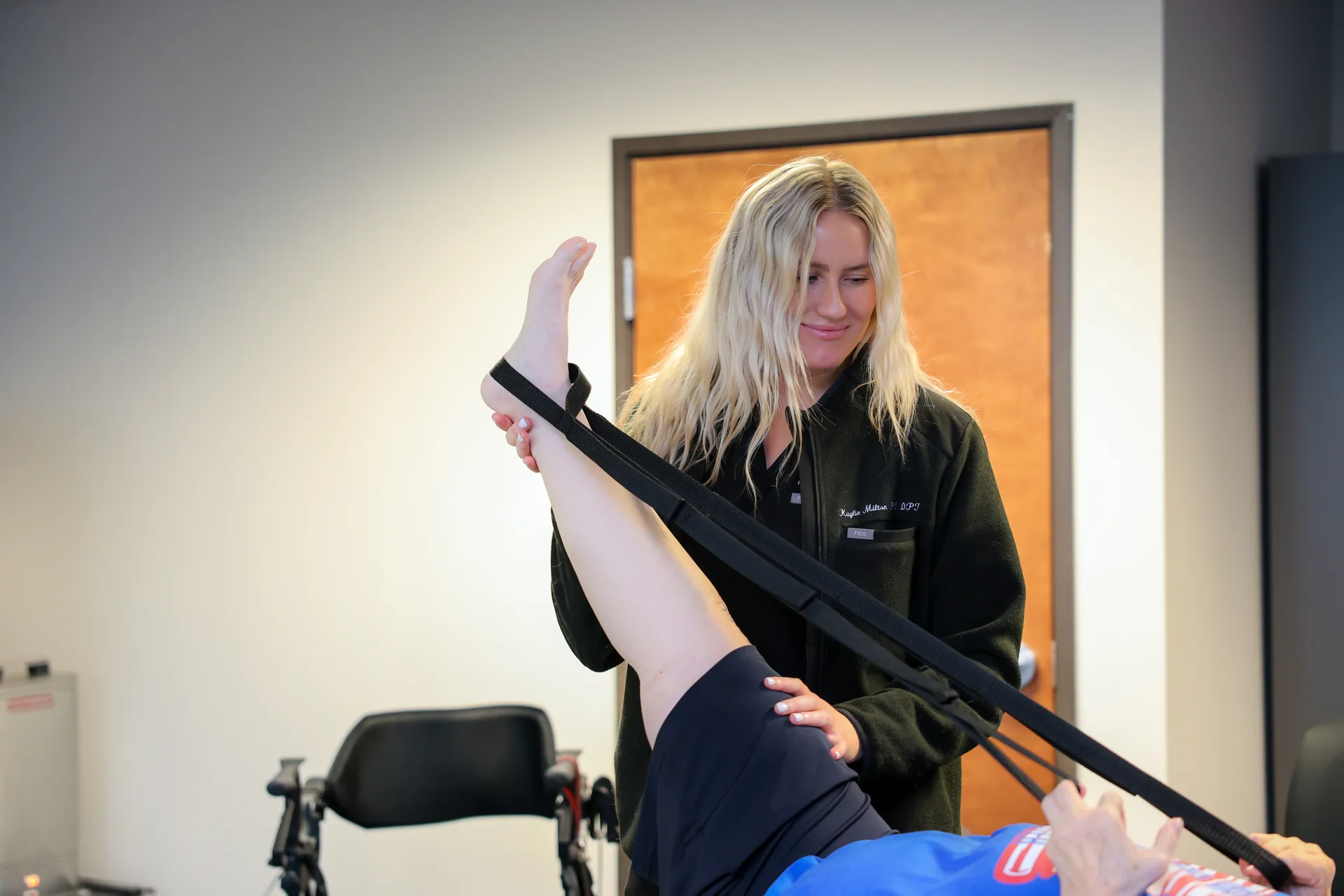
One-on-one care from a licensed Doctor of Physical Therapy who modifies your training rather than stopping it, so you keep moving toward your goals
Texas direct access means you start without a physician referral, and we combine hands-on work with progressive loading to build actual range and resilience
WHAT TO KNOW BEFORE YOU START.
Do I need a doctor's referral to start orthopedic therapy in Texas?+
No. Texas allows direct access to physical therapy, so you can schedule with us without a physician referral. If you have a referral or imaging from your doctor, bring it—it helps us move faster.
How long does orthopedic therapy take?+
Timelines are individual and depend on tissue irritation, how long the problem has been present, and how you load it during recovery. Most patients see meaningful progress in four to six weeks at two to three visits per week. We reassess after three visits and adjust the plan if needed.
Will orthopedic therapy help if I had surgery?+
Yes. Orthopedic therapy is central to recovery after surgical repair. Bring your surgical notes to your first visit so we understand the repair and build the right loading protocol to restore strength and motion.
What if my pain started years ago, not recently?+
Chronic orthopedic pain responds well to diagnosis and progressive loading. We start with a full evaluation to identify what tissue is irritated and what movement patterns are maintaining it, then build from there.
More about Orthopedic Therapy in Dallas, TX
The system that carries you, and the first one to complain.
Orthopedic therapy is rehabilitation of the musculoskeletal system: bones, joints, cartilage, tendons, ligaments, and the muscles that move them. It covers the rolled ankle, the shoulder that will not go overhead, the knee that aches on stairs, the back that flared up loading the car, and the weeks of recovery after a surgeon repairs any of it.
The mechanism is mechanical load, applied on purpose. Tendon, muscle, cartilage, and bone all remodel in response to the forces put through them, so the therapist’s real job is finding the dose that stimulates repair without setting you back. That starts with an actual examination: which tissue is irritated, which movement provokes it, and what elsewhere in the chain is making it work harder than it should. We go after the cause of the load, not just the sore spot carrying it.
Most of what hurts when you move is orthopedic.
If your pain has a location, a movement that reliably reproduces it, and a story about when it started, it belongs here. That is true whether it started last Saturday or four years ago.
Diagnose it properly, calm it down, then build it back.
Full Orthopedic Evaluation
Your first visit is a full hour with a Doctor of Physical Therapy: history, strength and range testing, movement screening, and a look at any x-rays, imaging, or surgical notes you bring. You leave knowing what is driving it.
Settle the Tissue, Restore the Motion
Early sessions bring the irritated tissue down and get the joint moving again with hands-on work, and with laser, shockwave, or dry needling when your presentation calls for it.
Load It Until It Holds
Then we build. Strength, control, and capacity progressed session by session until the tissue tolerates the thing that used to hurt, with margin left over. Most patients come two to three times a week for four to six weeks.
A joint that tolerates your life again.
The goal is not a quiet joint on the treatment table. It is a joint that holds up on the stairs, on the court, and at hour eight of a workday.
Irritated tissue settles, and the movements you have been quietly avoiding come back into your normal range of choices.
Testing almost always finds a specific weak link. Closing it is what keeps the same injury from coming back next season.
Hands-on work plus loading returns the actual range, instead of teaching you a lifelong detour around a stiff joint.
You know which phase you are in, what has to happen next, and what would tell us the plan needs to change.
Services we commonly combine with orthopedic therapy.
Physical Therapy
One-on-one rehabilitation built around how your body actually moves.
Joint Mobilization
Graded, hands-on movement applied directly to a stiff joint, restoring the motion that stretching alone cannot reach.
Sports Rehab
Return to your sport stronger, with a plan for staying there.