IT’S NOT JUST
WHERE IT HURTS.
- →A stretch hits a wall instead of lengthening the muscle through its full range
- →The same tight spot re-tightens within hours or days after a massage or stretching session
- →An old surgical scar or injury still pulls and limits your lift, run, or swing
A CLEARER WAY FORWARD.
Muscle is supposed to slide. After injury, surgery, or years in a repeated position, tissue layers adhere to each other and to the fascia around them. The muscle shortens, blood flow drops, and the nervous system guards the area. Mechanical pressure interrupts that loop—restoring glide between layers, driving circulation back in, and lowering resting tension so the muscle can lengthen again. We find the restriction, work it with hands or instrument, then move it through active range before it sets back.
Find the Restriction
Your therapist palpates along muscle and fascia for a texture change—the band that feels thick, ropey, or tender compared with tissue beside it. Where you feel tightness and where we find the actual restriction are often two different places.
Work the Tissue
Sustained pressure, stripping along the fiber, or friction across it—with the muscle held long or moved through range depending on what it needs. Dense restrictions receive instrument-assisted work (IASTM or ASTYM) for precision. Discomfort is normal; we adjust to your tolerance.
Move It Before It Sets
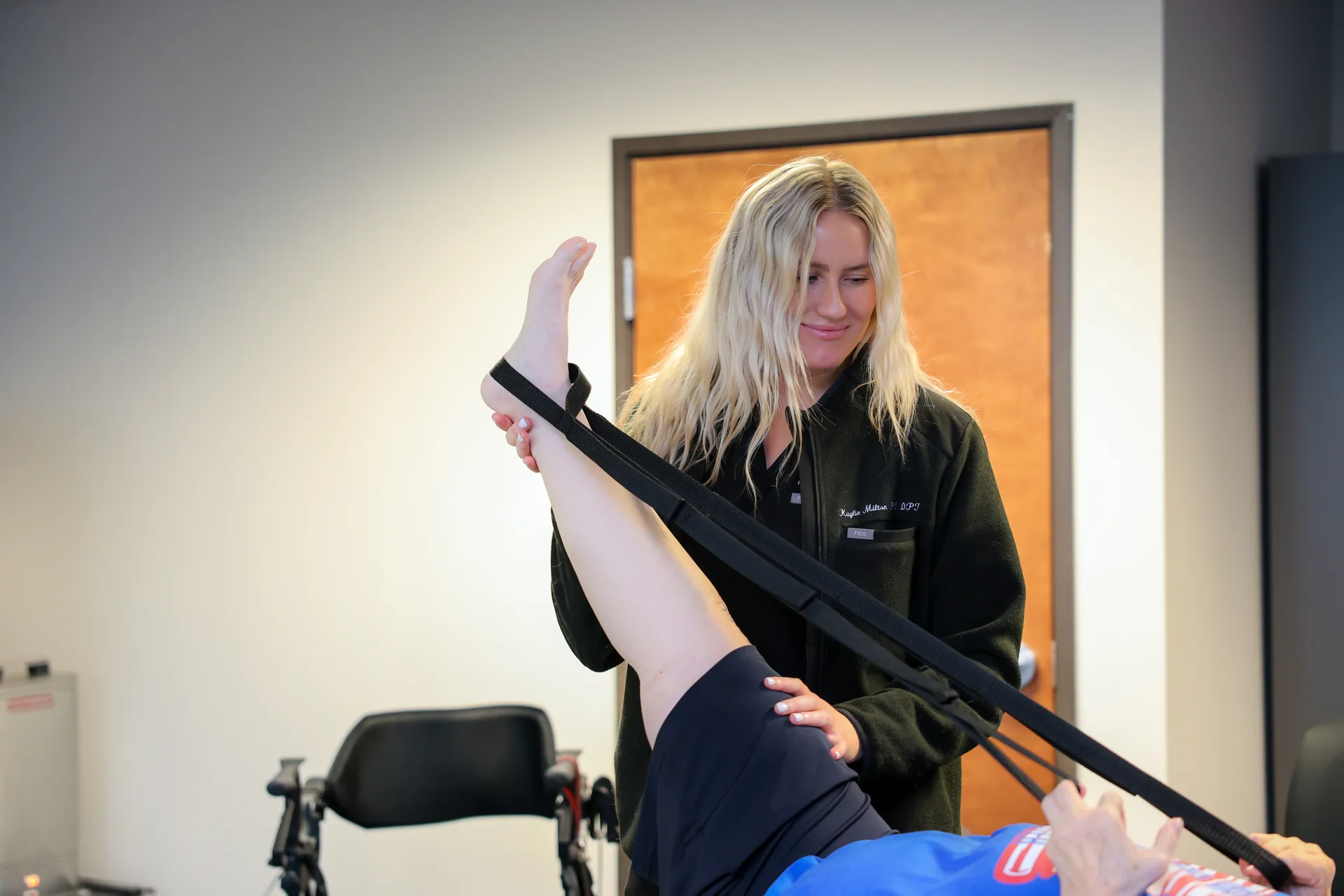
Newly freed tissue goes straight through active range and light loading. Without movement, the body tends to reorganize back toward the restriction. That's why hands-on work here is always paired with exercise, so the change lasts past the session.
CARE THAT
SEES YOU.
Layers that had adhered move against each other again, so the muscle can shorten and lengthen through its whole length the same day
A Doctor of Physical Therapy assesses the whole person and explains what's actually driving the restriction, not just treating the symptom
Movement is built into the plan so tissue stays lengthened, not re-tightening after you leave
WHAT TO KNOW BEFORE YOU START.
When should I choose soft tissue mobilization over stretching?+
If a stretch feels like it hits a wall, or if the same muscle re-tightens within a day, the restriction is in the tissue itself. Stretching a restricted muscle is like pulling a rope with a knot in it—the knot doesn't move. Mobilization finds and releases the knot so the muscle can actually lengthen.
Does instrument-assisted work (IASTM or ASTYM) hurt?+
It can be uncomfortable, and it should never be more than you agree to. The instrument lets us reach dense or scarred tissue with precision. Tell us what you're feeling, and we adjust pressure and technique. The discomfort is temporary and localized to the restriction.
How long does the relief last?+
Pairing mobilization with active movement makes the change last. Without the movement step, tissue tends to re-adhere. The combination—hands-on work plus exercise—is what keeps the muscle lengthened and gliding.
Will soft tissue work help an old surgical scar?+
Yes. Scar tissue from surgery or an old injury softens and stops tugging on healthy tissue around it, often restoring range and ease the same day. We combine mobilization with movement so the scar stays soft and mobile.
More about Soft Tissue Mobilization Dallas
Muscle is supposed to slide. Sometimes it stops.
Soft tissue mobilization is skilled hands-on work applied directly to muscle, tendon, ligament, and fascia. The therapist uses sustained pressure, stripping along the fiber, and friction across it to locate the restricted band, then works it until the layers move against each other again. Where a restriction is dense or scarred, we reach it with instrument-assisted work, including IASTM and ASTYM.
Healthy tissue glides. After an injury, a surgery, or years in the same repeated position, layers can adhere to each other and to the fascia wrapped around them. The tissue shortens, circulation drops, and the nervous system guards the area, which tightens it further. Mechanical pressure interrupts that loop: it restores glide between the layers, drives blood flow back into the area, and lowers the resting tone enough for the muscle to lengthen.
For tissue that has gone tight, thick, or stuck.
If a stretch feels like it hits a wall, if an old surgical scar still pulls, or if the same muscle re-tightens within a day of getting loose, the restriction is in the tissue itself.
Find the restriction, work it, then move it.
Finding the Restriction
Your therapist palpates along the muscle and fascia for a texture change: the band that feels thick, ropey, or tender compared with the tissue beside it. Where you point and where we find it are frequently two different places.
Working the Tissue
Sustained pressure, stripping along the fiber, or friction across it, with the muscle held long or moved through range depending on what the tissue needs. Dense restrictions get an instrument for precision. It can be uncomfortable, and it should never be more than you agree to. Say so and we adjust.
Move It Before It Sets
Newly freed tissue goes straight through active range and light loading. Without that step the body tends to reorganize back toward the restriction, which is why hands-on work here is always paired with exercise.
Tissue that lengthens, and stays lengthened.
Restoring glide changes the mechanics inside the session. Pairing it with movement is what makes the change last past the drive home.
Layers that had adhered move against each other again, so the muscle can shorten and lengthen through its whole length.
When the limit is structural, a stretch stops at a hard end point. Releasing the restriction usually gives that range back the same day.
Scar from surgery or an old injury softens and stops tugging on the healthy tissue around it every time you move.
Pressure lowers the resting tone in a guarded muscle and drives blood flow into an area that had been quietly starved of it.
Services we commonly combine with soft tissue mobilization.
Manual Therapy
Hands-on joint and soft tissue work to restore movement and ease pain.
Active Release Technique
A hands-on soft tissue method that breaks up scar tissue and adhesions while the muscle moves, restoring glide where tissue has stopped sliding.
Cupping
Myofascial decompression that lifts tissue and restores circulation.