
IT’S NOT JUST
WHERE IT HURTS.
- →One stiff spinal segment is pulling your whole lower back or neck into compensation, and stretching isn't moving it.
- →You've lost range in your swing, your running stride, or your ability to hinge without guarding pain kicking in.
- →You want to know if manipulation is actually right for you, not just get it done because another provider offered it.
A CLEARER WAY FORWARD.
Spinal manipulation is a high-velocity, low-amplitude thrust: a small, fast, carefully aimed force to one specific segment at the end of its available range. It works because of what happens next, not because of the pop.
Screening First
We move through your history, your symptoms, and your spine segment by segment, looking for anything that makes manipulation the wrong choice. Bring any imaging or doctor's notes. Not everyone is a candidate—and that's a legitimate outcome.
The Thrust
You're positioned so the force lands on one segment only. Your therapist takes up the slack, then delivers a short, quick, low-force thrust. Most people describe it as pressure and release. If anything is too much, we change the technique.
Use the Window
We retest immediately. The motion returns, and now you load that range with mobility and strength work. Manipulation opens the door. Exercise is what stops it closing again by Thursday.
CARE THAT
SEES YOU.
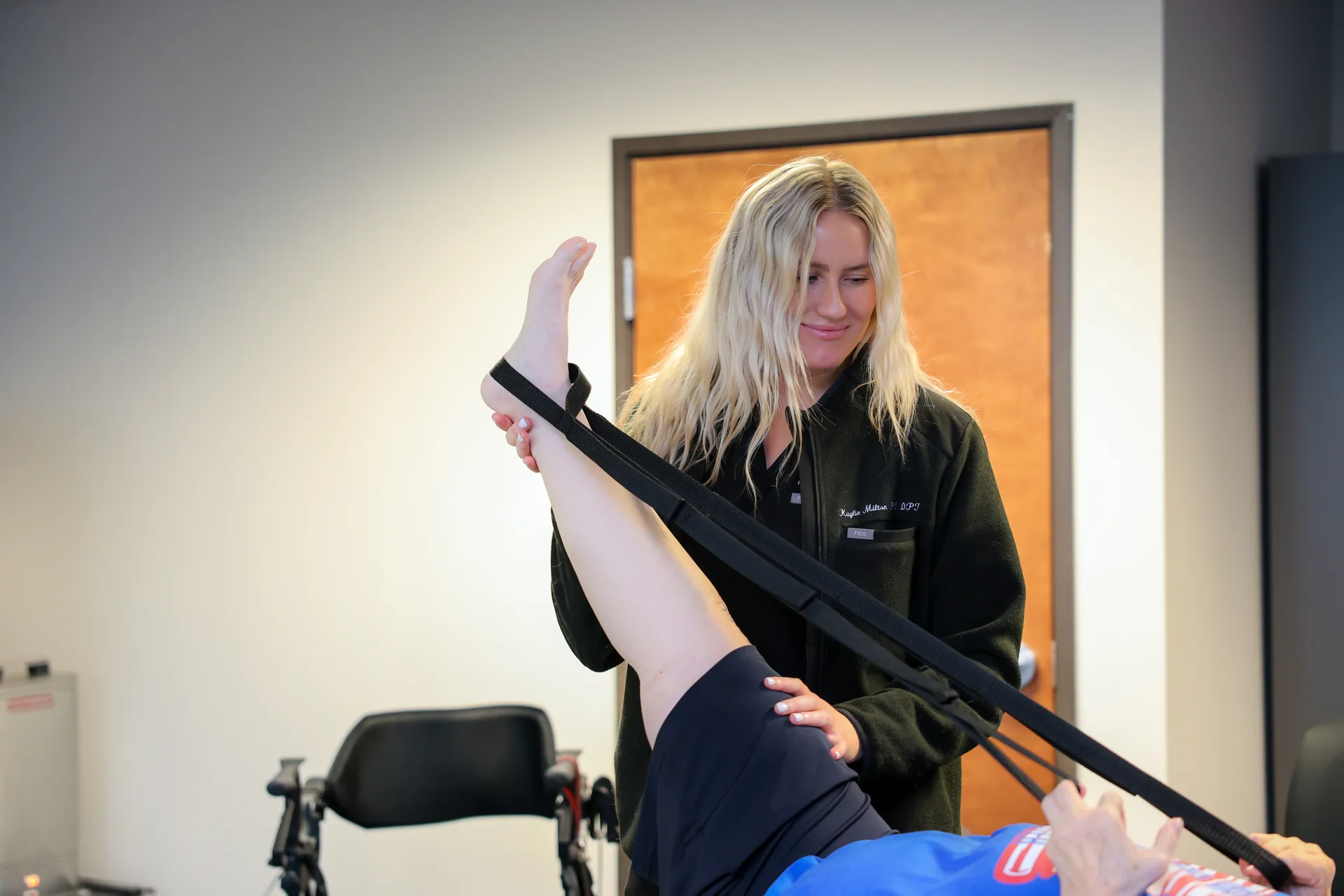
Dr. Mark Anthony Rodriguez holds specialized training in manual therapy techniques, including manipulations and adjustments—not a blanket offer to everyone.
We screen before we thrust. Stiff, guarded segments that respond to manipulation get it. Other presentations get gentler mobilization instead, and we explain why.
You feel measurable change inside the same session—usually within a minute—because the neurological window is real. Then we fill it with the work that lasts.
WHAT TO KNOW BEFORE YOU START.
What's that pop, and does it mean the technique worked?+
The pop is cavitation—gas coming out of solution in the joint fluid. It's not a bone going back into place, and it's not required for the technique to work. The change comes from the burst of neurological input that briefly turns down pain signaling and drops the reflex guarding around that level.
Will manipulation fix my back for good?+
No. Manipulation is one of the fastest ways to change a stiff, guarded spinal segment—often within a minute. But it opens a window. What you do inside it, the mobility and strength work that follow, is what decides whether the change holds. It's a starting point inside a plan, never the plan itself.
How do you know if I'm a candidate?+
Screening takes longer than the thrust itself. We review your history, your symptoms, any imaging, and test your spine segment by segment. If examination shows a specific stiff segment driving your pain, manipulation makes sense. If not, we use gentler joint mobilization instead and tell you why.
What other treatments work well with spinal manipulation?+
Dry needling releases the muscle guarding that builds up around a segment that stopped moving. Joint mobilization restores motion that stretching alone cannot reach. Manual therapy to surrounding joints and soft tissue eases pain and restores the movement patterns that let you return to lifting, running, golf, or hiking.
More about Spinal Manipulation in Dallas, TX
One quick thrust, one direction, one specific segment.
Spinal manipulation is a high-velocity, low-amplitude thrust: a small, fast, carefully aimed force delivered to a single spinal segment at the end of its available range. Physical therapists are licensed and trained to perform it, and Dr. Mark Anthony Rodriguez holds specialized training in manual therapy techniques including manipulations and adjustments. The pop you may hear is cavitation, gas coming out of solution in the joint fluid. It is not a bone going back into place, and it is not required for the technique to work.
The effect is largely neurological. The thrust sends a burst of input from receptors in and around the joint capsule, which briefly turns down pain signaling at the spinal cord, drops the reflex guarding in the muscles around that level, and opens a window of easier movement. That window is short. What you do inside it, the mobility work and the strengthening that follow immediately, is what decides whether the change holds.
Right for a locked segment, not for every sore back.
Manipulation is chosen when the examination finds a specific stiff segment driving your symptoms. If your presentation says otherwise, we use a gentler grade of joint mobilization instead, and we tell you why.
It takes a fraction of a second. The screening takes longer.
Screening First
Before a thrust is considered we go through your history, your symptoms, and your spine segment by segment, looking for anything that makes manipulation the wrong choice. Bring any imaging or doctor’s notes you have. Not everyone is a candidate, and hearing that is a legitimate outcome of the visit.
The Thrust
You are positioned so the force lands on one segment and nowhere else. Your therapist takes up the slack, then delivers a short, quick, low-force thrust. Most people describe it as pressure and release rather than pain. If anything is too much, say so and we change the technique.
Use the Window
We retest the motion immediately, then load the range you just got back with mobility and strength work. Manipulation opens the door. Exercise is what stops it closing again by Thursday.
Immediate change, then the work to keep it.
Manipulation is one of the fastest ways to change a stiff, guarded spinal segment. It is a starting point inside a plan, never the plan itself.
Most patients feel a clear drop in pain and stiffness inside the same session, often within a minute of the technique.
The level that would not move moves, and the levels above and below it stop compensating on its behalf.
Muscles that had been splinting around the joint let go, which is usually why the whole area feels lighter afterward.
With pain and stiffness temporarily down, you can finally train the range and strength that were blocked before.
Services we commonly combine with spinal manipulation.
Dry Needling
Releases the muscle guarding that builds up around a spinal segment that has stopped moving properly.
Joint Mobilization
Graded, hands-on movement applied directly to a stiff joint, restoring the motion that stretching alone cannot reach.
Manual Therapy
Hands-on joint and soft tissue work to restore movement and ease pain.