

One of the most frequent questions we hear from new patients is simple: does dry needling hurt? It is a completely valid concern, especially if the idea of needles makes you nervous. At TheraRehab & Wellness, we believe in total transparency about your treatment so you can feel confident and relaxed during your recovery.
While the word “needle” often brings to mind the sharp pinch of a flu shot or a blood draw, dry needling is a significantly different experience. For many residents seeking physical therapy in Dallas, this technique has become a game-changer for resolving chronic pain and restoring mobility.
In this guide, we will break down exactly what the sensation feels like, why the treatment is so effective, and how our team makes the process as comfortable as possible.
What Exactly Is Dry Needling?
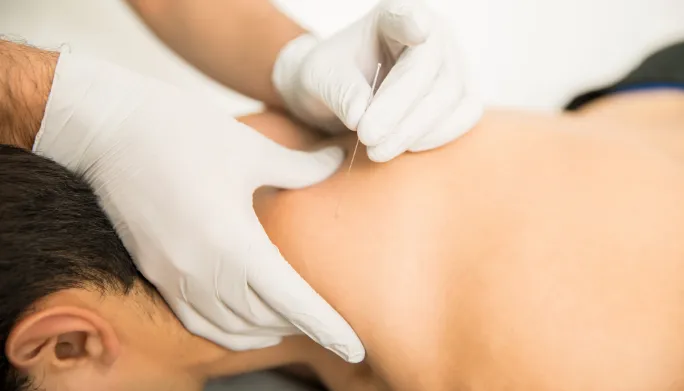
Before we discuss the sensation, it helps to understand what is happening during the treatment. Dry needling is a skilled intervention used by physical therapists to treat dysfunctions in skeletal muscle, fascia, and connective tissue.
Unlike a hypodermic needle used for injections (which is hollow and larger to deliver liquid), the needles used in dry needling are solid, flexible, and incredibly thin—often referred to as monofilament needles. The goal isn’t to inject anything into the body, but to target “trigger points” or tight knots within the muscle tissue that are causing pain and restricting your movement.
The Sensation: What Does It Feel Like?
So, does dry needling hurt? The honest answer is that it varies from person to person, but most patients describe it as a sensation of pressure or a dull ache rather than sharp pain. Here is a phase-by-phase breakdown of what you can expect during a session at our Dallas clinic.
1. The Insertion
Because the needles are so fine, most patients barely feel them entering the skin. You might feel a tiny prick, similar to a mosquito bite, or you might not feel it at all.
2. The Local Twitch Response
This is the most critical part of the therapy. When the needle hits the active trigger point, your muscle may engage in a “local twitch response.” This is a quick reflex where the muscle fibers contract and then release.
Does this part hurt? It can be uncomfortable for a brief second. Patients often describe it as a deep cramp or a heavy ache. However, this twitch is actually a good sign—it means the needle has hit the source of your tension, and the muscle is resetting itself to a relaxed state.
3. The Release
After the twitch response, you will typically feel an immediate sense of relaxation in that muscle group. The tightness that has been plaguing you for weeks or months often begins to dissipate right there on the table.
Managing Post-Treatment Soreness
It is important to note that you might experience some soreness after your appointment. This is typically described as “workout sore”—similar to how your muscles feel after a session at the gym. This usually fades within 24 to 48 hours.
Our team at TheraRehab & Wellness will provide you with specific instructions to manage this, which may include hydration, gentle stretching, or applying heat.
Dry Needling vs. Acupuncture: What’s the Difference?
Many people confuse dry needling with acupuncture because the tools look the same, but the philosophy and medical goals are quite different.
- Acupuncture is based on Traditional Chinese Medicine. It focuses on altering the flow of energy (Qi) along traditional meridians in the body.
- Dry Needling is based on Western medicine and research. It strictly targets anatomy—specifically muscles and nervous system trigger points—to reduce pain and restore function.
If you are looking for sports rehabilitation or relief from orthopedic issues, dry needling is a targeted approach to address the physical mechanics of your pain.
Why Endure the Discomfort? The Benefits
If there is a chance of momentary discomfort, why do so many patients choose this treatment? The results often speak for themselves. Dry needling is incredibly effective at treating:
- Chronic Pain: It reaches deep muscles that manual massage sometimes cannot.
- Mobility Issues: By releasing tight knots, your range of motion can improve instantly.
- Sports Injuries: Athletes often recover faster when muscle tightness is resolved quickly.
- Headaches and Sciatica: Releasing tension in the neck or lower back can alleviate referred pain.
When combined with other treatments we offer, such as shockwave therapy or laser therapy, dry needling can be a catalyst for rapid healing.
Experience Top-Rated Physical Therapy in Dallas
Your recovery journey is unique, and at TheraRehab & Wellness, we don’t believe in one-size-fits-all solutions. Dr. Mark Anthony Rodriguez and our team of licensed physical therapists use a proven 4-Phase Recovery Program (Pain, Prime, Perform, Prevent) to ensure you don’t just get quick relief, but long-term results.
Whether you are an office worker in Dallas dealing with “tech neck” or a runner trying to get back on the trail, we are here to help you live pain-free.
Frequently Asked Questions
Is dry needling safe?
Yes, when performed by a certified physical therapist, dry needling is very safe. We use sterile, disposable needles to prevent infection. Side effects are minor and typically include bruising or temporary soreness.
Do I need a doctor’s referral for dry needling in Dallas?
In Texas, the Direct Access law allows you to seek physical therapy services without a referral from a physician for up to two weeks. This means you can get started on pain relief immediately.
How many sessions will I need?
This depends on your specific condition. Some patients feel relief after just one session, while others with chronic conditions may need ongoing maintenance. During your initial evaluation, we will create a roadmap for your recovery.
Can I drive after the appointment?
Yes. While you may feel sore, dry needling does not impair your ability to drive or return to work.
Ready to Relieve Your Pain?
Don’t let the fear of the unknown stop you from feeling your best. Now that you know the answer to “does dry needling hurt,” you can make an informed decision about your health.
If you are suffering from muscle pain or limited mobility, our team in Dallas, TX is ready to help.
Request an appointment today and take the first step toward a pain-free life.