

Dry needling is a popular and effective treatment for muscle pain and stiffness, but many patients have questions about the procedure. One common concern is what happens when dry needling hits a nerve. Understanding this possibility is key to feeling comfortable and confident in your treatment. While a skilled physical therapist takes every precaution to avoid this, it’s helpful to know what the sensation feels like and why it’s generally not a cause for alarm.
At TheraRehab & Wellness, our certified therapists in Dallas are highly trained in performing dry needling safely and effectively. This post will walk you through the sensations you might experience during treatment, explain the difference between a local twitch response and a nerve sensation, and clarify what happens if a needle makes contact with a nerve. Our goal is to provide you with the information you need to feel secure on your path to recovery.
Understanding the Dry Needling Process
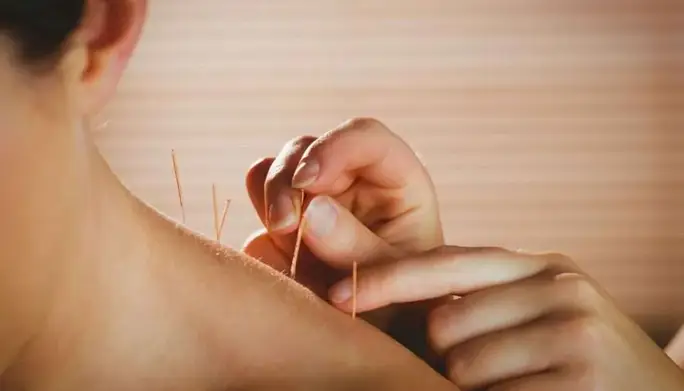
First, it’s important to understand what dry needling is designed to do. This technique involves inserting a thin, sterile monofilament needle into the skin to target myofascial trigger points. These trigger points are tight, sensitive knots within a muscle that can cause pain and restrict movement. The primary goal is to elicit a “local twitch response,” which is an involuntary spinal cord reflex where the muscle fibers contract and then relax. This response helps release muscle tension, improve blood flow, and reduce pain.
During a typical session, your physical therapist will identify these trigger points through palpation. Once a trigger point is located, they will gently insert the needle. Many patients don’t feel the insertion at all, while others report a slight prick. The most common and desired sensation is the local twitch response, which can feel like a brief muscle cramp or spasm. This is a sign that the treatment is working correctly.
What Does it Feel Like if Dry Needling Hits a Nerve?
While therapists are trained to avoid major nerves, the body has an intricate network of smaller, superficial sensory nerves. Occasionally, a needle may come into contact with one of these. Here’s what you might feel:
- A quick, sharp, or electric-like sensation. This feeling is often described as a “zing” or a jolt that travels a short distance along the nerve’s path.
- A tingling or prickling feeling. Similar to when your foot “falls asleep,” you might experience a temporary pins-and-needles sensation.
- A brief, sharp pain. This is different from the dull ache or cramping sensation of a local twitch response.
When this happens, it is a momentary event. An experienced therapist will recognize the patient’s reaction and immediately adjust or remove the needle. The sensation typically disappears almost as quickly as it started. It is not an indication of damage but rather a sign that the needle has stimulated a sensory nerve.
Twitch Response vs. Nerve Sensation: What’s the Difference?
It’s easy for patients to confuse the feeling of a local twitch response with hitting a nerve, but they are distinct sensations.
- Local Twitch Response: This feels like a deep, brief muscle cramp or jump right at the trigger point. It can be surprising but is often followed by a feeling of release and relaxation in the muscle. This is the intended therapeutic outcome.
- Nerve Sensation: This is a sharper, more electric feeling that may radiate along a specific path. It is superficial and subsides as soon as the needle is repositioned.
Your therapist will communicate with you throughout the session to ensure you are comfortable. If you ever feel a sharp or electric-like pain, it is crucial to let them know immediately.
Is It Dangerous if a Needle Hits a Nerve?
For the vast majority of patients, having a dry needle stimulate a superficial sensory nerve is not dangerous. These nerves are resilient, and the brief contact from a fine needle is highly unlikely to cause any lasting damage. The sharp sensation is simply the nerve sending a strong signal to your brain.
Our physical therapists at TheraRehab & Wellness are experts in anatomy and use precise techniques to ensure your safety. They are trained to:
- Understand the anatomical pathways of major nerves and blood vessels.
- Use appropriate needle lengths for different muscle groups.
- Adjust their technique based on patient feedback in real-time.
Serious complications from dry needling, such as significant nerve damage, are extremely rare, especially when performed by a qualified and certified professional. The benefits of releasing painful trigger points and restoring function almost always outweigh the minimal risk of temporary nerve irritation.
Your Path to a Pain-Free Life in Dallas
Understanding what happens when dry needling hits a nerve should help ease any concerns you may have about the treatment. The momentary, sharp sensation is a rare occurrence and is managed instantly by a skilled therapist. The primary goal remains the therapeutic local twitch response, which provides lasting relief from muscle pain and tightness.
If you are struggling with chronic pain, sports injuries, or limited mobility, dry needling may be an effective part of your recovery plan. At TheraRehab & Wellness, our dedicated team provides personalized care to help you achieve your health goals. We combine advanced treatments like dry needling with comprehensive physical therapy to ensure you get the best possible outcomes.
Don’t let pain hold you back. Schedule an appointment with our expert physical therapists in Dallas today and take the first step on your path to recovery.